Natural light
  • News and Blog

Re:Tweet of the Day - Pied Butcherbird

13/10/2014

0 Comments

 
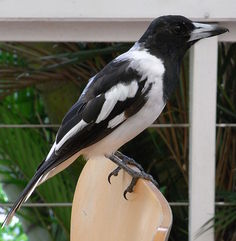
Pied ButcherbirdPied Butcherbird (Wikimedia)
A few weeks ago we Re:Tweeted the Australian magpie, and it’s back to the island continent for perhaps its greatest songster.  These two species create the sonic backdrop to so many Australian landscapes; it is not surprising that since the early twentieth century composers have been inspired by them.  


This morning Miranda Krestovnikoff presented the bird that has probably inspired more composers than any other non-European species.  In the latest of our Re:Tweets we look at the pied butcherbird of Australia.  Click the button to hear the original Radio 4 Tweet of the Day.


listen again
Indeed, birdsong seems to be an especially important influence among composers seeking to add a truly Australian voice to western tradition.  Henry Tate (1873-1926) actively encouraged this and two more generations of composers, from the late Peter Sculthorpe (1928-2014) to Brett Dean (b.1961) and John Rodgers (b. 1962) have appropriated birdsong and other natural sounds as a key ingredient in developing an Australian music that is today among the most vibrant and constantly evolving in the western world.

the pied butcherbird is a virtuoso of composition and improvisation
For Tate, the butcherbird was a particularly valuable resource.  “The slow and dreamy prelude of the butcherbird naturally expands into musical sentences.”  David Lumsdaine (b. Sydney 1931) has created recorded soundscapes, dance pieces and a string quartet based on butcherbird song.  He writes “the pied butcherbird is a virtuoso of composition and improvisation: the long solo develops like a mosaic, through the varied repetition of its phrases. In the course of the song, some elements remain constant, some elements transform through addition and elimination. The bird is a virtuoso of decoration: there is an extraordinary delicacy in the way it articulates the harmonic course of its song with microtonal inflections...”
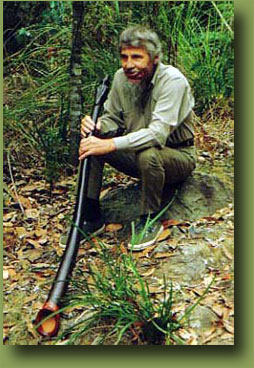
Ron NagorckaRon Nagorcka
There has even been a PhD thesis, by Hollis Taylor, on composers’ use of the butcherbird song, exploring whether birdsong can be thought of as music in its own right.  Taylor concludes  that the butcherbird’s “elaborate song culture seems to overreach biological necessity, indicating an aesthetic appreciation of sound.”

Composer, performer, and naturalist Ron Nagorcka (b. 1948) grew up on a sheep farm in Western Victoria.  Artamidae (2004) is his five-movement suite celebrating a family of Australian songbirds: the grey butcherbird, Australian magpie, black currawong, pied butcherbird, and grey currawong.  He uses a fretless electric guitar to achieve the particular microtonal details he identifies as just intonation - the natural effect of diving or multiplying pitch frequencies in simple ratios.  This makes butcherbird song sound slightly out of tune to western ears.

I’m not sure I agree with the analysis, but I do like Nagorcka’s idea that being literally in tune with nature (as opposed to western scales) is something a female listens for in selecting a mate.

perhaps the most magical sound found on the whole Australian continent
The last word should go to Brett Dean (b.1961) who, like Sculthorpe, often finds the music through which to express a deep concern for the environment.  His Pastoral Symphony incorporates a recording of the butcherbird.  Dean comments: “Sure, we all love nature, but what we love more are all the trappings of modern living... certainly more than the desire to stop and bask in the glory of a single butcherbird, perhaps the most magical sound found on the whole Australian continent. This piece, then, is about glorious birdsong, the threat that it faces, the loss, and the soulless noise that we're left with when they're all gone.”
0 Comments

Re:Tweet of the Day - Lyrebird

18/9/2014

0 Comments

 
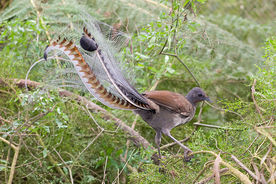
Like millions of people, I first heard the incredible song of the Lyrebird courtesy of David Attenborough’s Life of Birds series back in 1998.  Those few minutes of expert mimicry have been voted one of the most popular wildlife clips ever.  This morning Sir David presented this wonderful songster on Radio 4's Tweet of the Day.

Listen again
Superb lyrebirdFir0002/Flagstaffotos
Unsurprisingly, the lyrebird features in aboriginal Australian music, in what may be a continuous tradition lasting tens of thousands of years.  Matthew Doyle, a composer and dancer of aboriginal-Irish descent, continues this tradition in a series of pieces for voice, didjeridu and percussion, issued on a CD entitled, simply, Lyrebird.

A composer who famously appropriated birdsong into many works was Olivier Messiaen, and later composers such as Harrison Birtwistle have claimed that his Messiaen’s style oiseau had a direct and lasting impact on modernists searching for more naturalistic – or at least less formal – musical structures.  It is perhaps fitting that Messiaen’s last completed work should incorporate the bird widely regarded as having the most extraordinary song of them all.

Éclairs sur l'au-delà… [Illuminations of the beyond…] is an orchestral piece composed in 1987–91.  Messiaen visited Australia during that country's bicentennial celebrations in 1988, enabling him to use the sounds of Australian birds notated in the wild.  The third of eleven movements is called L’Oiseau-lyre et la Ville-fiancée [The Lyrebird and the Bridal City].  Whereas traditional Australian music features vocal and didjeridu imitations of birds, Messiaen's works attempt to reproduce the extreme complexity of bird song through notated music.  L'oiseaux-lyre et la Ville-fiancée is among his most complex, with 67 changes of tempo and a dizzying variety of motifs.

Someone who knows these birds and their songs well is the composer Edward Cowie, who was interviewed by NATURAL LIGHT a couple of weeks ago.  He spent twelve years in Australia in the 1980s and 90s and describes an evening sitting at the edge of a cliff overlooking the King Valley in Victoria.  “Just as the light finally dipped towards an inky darkness, several male lyrebirds began to sing in a series of interlocking but combative ensemble performances”.   Cowie often contrasts himself with Messiaen:  he doesn’t attempt to note, and then notate, the exact rhythms, pitches and timbres of the bird.  He is more interested in natural sound as part of an overall experience of a landscape, a place, a moment.
For me, Lyre Bird Motet captures that smoky valley in Victoria wonderfully.  Cowie uses rather dreamy harmonies from one part of the chorus to suggest a balmy dusk scene while the other singers, like a real evening chorus, are all (seemingly) independent soloists, bringing bursts of sound, or maybe shafts of light, into the dim, cool forest.

This morning, on Tweet of the Day, we heard how the Lyrebird – a bit like Edward Cowie - is an avid borrower of sound, listening, choosing, and replaying echos of its own immediate environment. 

Recently, while preparing a talk about birds and music, I ran a search for samples of lyrebird song.  The best was from a captive bird in Adelaide Zoo.  The lyrebird enclosure was in need of repair and a pair of local builders had been brought in.  Some days later Chook, the dominant male lyrebird, gave a recital of his latest composition, based mainly on the sounds he had borrowed from the builders.  In a remarkable recording we hear the hammering of a hammer, the whirr of an electric screwdriver, a power drill, and an old-fashioned hand saw cutting through a plank.  We also hear one builder greeting the other and we can surmise that Chook’s neighbours included a whip-bird and a kookaburra, because we hear a perfect imitation of them both – simultaneously!
Update:  Edward Cowie's Lyre Bird Motet will be part of the BBC Singers' 90th birthday celebrations next Wednesday 24th September, St. Giles Cripplegate, London 6pm.
0 Comments

Re:Tweet of the Day - Australian Magpie

7/9/2014

2 Comments


Welcome...

...to a new occasional series that takes the subject of the morning's Radio 4 Tweet of the Day and explores music inspired by that species.  This morning, Sir David Attenborough introduced us to the Australian Magpie.
Listen again
Picture
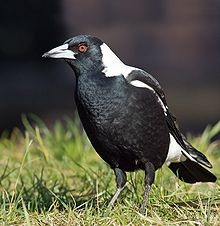
It is difficult to imagine a composer taking our magpie’s song as a starting point for a piece of music, but the Australian version’s melodious song with its clearly pitched notes is celebrated by several including John Rodgers and Ross Edwards, two Australian composers who often feature bird songs in their works.  British composer David Matthews describes how friends he was staying with introduced him to the song of their resident magpie.  He wrote down this haunting song, hoping to use it in some way. Later he noted down three more songs, two of them distinctively melodic. The koel, a large Australian cuckoo, had just arrived for spring - and sang day and night.  The pied butcherbird sings three notes on different distinct pitches. Lastly, the eastern whipbird has a crescendoing high note followed by an extraordinary, loud whip-crack.   From this material Matthews wrote Aubade, for chamber orchestra. It develops the initial eight notes of of the Australian magpie’s song into a long violin melody which is later reprised on the cello.

Matthews says "My recent music has become more diatonic, and I have been using folksong in some pieces, and incorporating birdsong into others. Landscape and the natural world have always been important stimuli for my music".

Michael Kennedy, writing in the Sunday Telegraph in 2001 described Aubade as “an appealing essay in the honourable English tradition of short nature pieces – rather like a present-day equivalent of Delius’s First Cuckoo.”


2 Comments
Forward>>

    Welcome

    to 
    NATURAL LIGHT
    a site devoted to nature, and artists who are 
    inspired by it

    editor Laurence Rose

    Follow us on 
    Facebook and Twitter
    Email us

    RSS Feed

    Tweets by @Naturemusicpoet

    Archives

    October 2018
    September 2018
    May 2018
    January 2018
    December 2017
    November 2017
    October 2017
    August 2017
    June 2017
    May 2017
    April 2017
    October 2016
    July 2016
    June 2016
    April 2016
    January 2016
    December 2015
    November 2015
    October 2015
    September 2015
    August 2015
    July 2015
    June 2015
    May 2015
    April 2015
    March 2015
    February 2015
    January 2015
    December 2014
    November 2014
    October 2014
    September 2014
    August 2014
    July 2014
    June 2014

    Categories

    All
    Australia
    BBC Proms
    Biodiversity
    Birds
    Campaigns
    Cheltenham Festival
    Conversations
    Endangered Species
    Environment
    Fenland
    Festivals
    Flamenco
    Hear And Now
    Iceland
    Landscape
    Literature
    Moth
    Music
    Norfolk Festival Of Nature
    Olivier Messiaen
    Peter Sculthorpe
    Poetry
    Re:Tweet Of The Day
    RSPB
    Sibelius
    Soundscape
    Spain
    Ted Hughes
    The Long Spring
    Uplands
    Wetlands
    Words
    WW1

Powered by Create your own unique website with customizable templates.