Natural light
  • News and Blog

The nature of John Luther Adams

22/4/2015

0 Comments

 
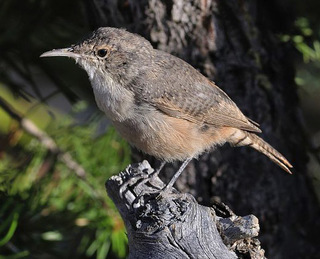
Canyon wrenPhoto: Yathin sk (http://creativecommons.org/licenses/by-sa/3.0) via Wikimedia Commons
Today is Earth Day 2015, and Radio 3 has been tweeting its suggestions for suitable music.  Last Year's Earth Day was marked by a special performance of what the New York Times described as "the ultimate environmental piece" - Inuksuit by John Luther Adams.

Written for " between nine and ninety-nine percussionists" it is a piece for playing in the outdoors, and adapted for the environment in which it is to be heard.

At the other end of the scale, John Luther Adams's ethereal homage to the humble canyon wren (pictured) is featured in this Saturday's Hear and Now. Birdwatcher, guitarist and broadcaster Tom McKinney will be reviewing the latest CDs on BBC Radio 3's flagship contemporary music programme.

Click the button for programme details and, from Sunday for 30 days, to hear it again.

Hear and Now
John Luther Adams lived for many years in Alaska but now splits his time between New York and Mexico's Baja California.  Landscape and the natural world are his strongest influences:  in the 1970s and 80s he was a full-time environmental activist and worked for the Wilderness Society, the Alaska Coalition, and the Northern Alaska Environmental Center.

He has been described by critic Alex Ross as  “one of the most original musical thinkers of the new century.” In an article for slate.com Adams says: Making music outdoors invites a different mode of awareness. You might call it “ecological listening.” In the concert hall, we seal ourselves off from the world and concentrate our listening on a handful of carefully produced sounds. 
Outdoors, rather than focusing our attention inward, we are challenged to expand our awareness  .... to receive messages not only from the composer and the performers, but also from the larger world around us.

Fans of Adams will be able to experience a new outdoor work at this year's East Neuk Festival in June, along with a programme of literary events celebrating our profound connections with nature, landscape and seascape. See our What's On page for details.

Like NATURAL LIGHT, Tom McKinney's excellent blog also explores the connections between birds and music.

0 Comments

Inspired by swans - a hundred years on

21/4/2015

1 Comment


21 April 1915, Ainola, Finland

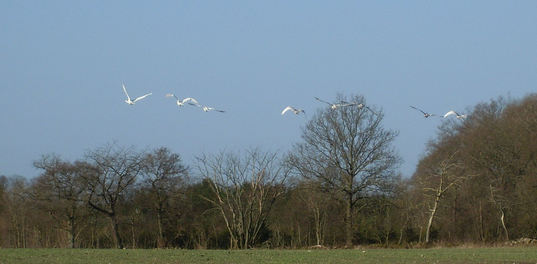
Today at ten to eleven I saw 16 swans. One of my greatest experiences! God, how beautiful! They circled above me for a long time. They disappeared into the haze of the sun like a gleaming silver ribbon. The sounds are like a kind of woodwind, the same as the sound of the cranes, but without the tremolo. The sound of the swans is closer to the trumpet, even if it clearly recalls the timbre of the sarrusophone. A low refrain, which is like the crying of a small child. Nature mysticism and the pain of life! The finale of the fifth symphony -
Picture
Legato in the trumpets!! This had to happen to me, who has been an outsider for so long. So I've been in a holy place today, 21st April 1915.
PictureFredrik Lähnn
Sibelius’s Fifth Symphony underwent the longest, most difficult gestation of all his works. He began composing it during the late summer of 1914 but made slow progress, writing in his diary, “It is as if God had thrown down mosaic pieces from heaven’s floor and asked me to put them back as they were.”

By April 1915 he was struggling with the finale, searching in vain for the theme that would bring the great work to a fitting conclusion.  The problem was solved on the morning of 21st when inspiration finally came with the spring arrival of Finland’s national bird, the whooper swan.

Sibelius 5th
Click the button to hear Stephen Johnson on Sibelius's 5th Symphony in BBC's Discovering Music series.
1 Comment

Vote blue, go grey

19/4/2015

0 Comments


Why I voted for the bluebell and the hen harrier

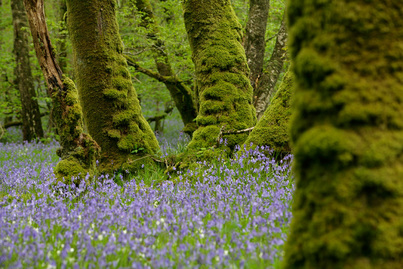
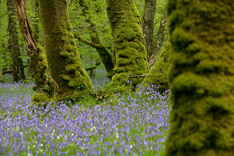
bluebellsAndy Hay (rspb-images.com)
As part of celebrations for its 25th anniversary, Plantlife has launched a poll to find the nation’s favourite wild flower.

One in five of Britain’s wild flowers is under threat and the vote is an opportunity to highlight their plight.  As with the concurrent election for Britain’s national bird, I have had no hesitation which gets my vote. 

The bluebell has previously been voted Britain’s favourite flower, and it’s mine, too.  But tactical voters should also vote bluebell.  While you can find them in neighbouring countries, the classic bluebell wood is almost uniquely a British sight.  Between a quarter and a half of all the world’s bluebells are found in Britain and Ireland.

However, during my recently-completed two year secondment in North Norfolk, I found a significant acreage of bluebells in the Snettisham area that was contaminated through hybridisation with the rampant Spanish bluebell.  It is a problem reported from most parts of Britain.  The Spanish species is a garden favourite which readily escapes into the wild.  It is more invasive and more vigorous than our native species, and hybrids even more so.

I have found that whereas the common bluebell takes around three years to flower from seed, a Spanish bluebell plant will flower in its first year, so the rate at which the native plants can be genetically swamped is frightening.  Whatever your views on non-native plants’ “right” to grow wild, the fact is, the common bluebell is more beautiful, more scented, and more part of our cherished woodland landscape than its paler, more rugged-looking cousin.

Picture
Andy Hay (rspb-images.com)
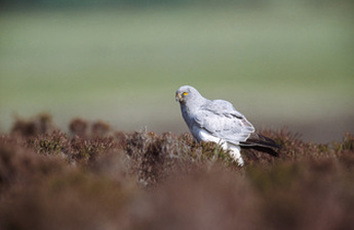
As with the hen harrier, which gets my vote in the National Bird Vote, there is a difficult conservation challenge to face.  There is just a chance that the necessary impetus to solve both will be helped along by declaring them our national favourites.

And unlike the Other Election, these are two polls where “none of the above” just doesn’t make sense.
Vote Favourite Flower
Vote National Bird
0 Comments

When nature and art don't mix

8/4/2015

0 Comments


T in the Park threatens ospreys - and vice versa

Ospreys have returned to the proposed site of T in the Park festival at Strathallan Castle, and police are monitoring the nest site for fear of disturbance to this highly protected species.  Campaigners opposed to the festival taking place so close to the traditional nesting site of Scotland's conservation icon, have obtained video evidence that shows they have returned from their African wintering grounds.
The festival, which is due to feature acts such as The Prodigy, Kasabian, and Noel Gallagher, has been dogged by controversy since its proposed move there was announced last year. Hundreds of letters of objection and support have been sent to Perth and Kinross Council.  Tickets have been sold despite a decision on planning permission not being due until next month.

The RSPB and other conservation campaigners have criticised DF Concerts for being poorly organised and unprepared for the ospreys' return.  The organisation's tactic of erecting a crane by the nest site to scare the birds away from this site while an alternative site was constructed, has also been controversial.  As long as the birds were away in Africa, the nest site was not considered "active", the organisers argued, claiming that the move was therefore not against the law.

Now video obtained yesterday shows the birds' attachment to their usual nest site is too strong, and they appear to have returned.  If so, the concert organisers, and potentially concert-goers themselves, may face up to 6 months in prison and/or a £5000 fine.  DF Concerts have announced that the festival will still go ahead, but have not yet explained how they will achieve this within the law.  Experts have called for a 750 metre buffer zone around the nest.


RSPB Scotland said they “will continue to work with all parties to see if any contingencies might be available to allow the event to proceed and for the birds to be given the required space and freedom they require so they will enjoy a successful breeding season.”

A spokesperson for T in the Park said: “We can confirm that Osprey have returned to Strathallan.” They pledged to “liaise with the relevant organisations to ensure the protection of the birds,” and added: “we’d also like to assure fans that the festival will go ahead. The decision on our planning application will still be made in May and we remain confident that the event will take place at Strathallan.”


0 Comments

Cape Farewell announces Rural Artist in Residence

4/4/2015

0 Comments

 
Vanessa Reid, Cape Farewell
Vanessa Reid is a political ecologist focusing on food sovereignty, food waste and organic agriculture in the South West of England, proposing the need for radical systemic change within our current food and farming system: one which is becoming increasingly unsustainable, and unhealthy, for both planet and people. Based in Bristol, she is Co-Director of This is Rubbish, a community-interest company, aiming to communicate the preventable scale of food wasted in the UK, through policy research, community and arts led public events.

Vanessa will be working with farmers from the Cerne valley Area of Outstanding Natural Beauty in Dorset.  She is currently designing and creating an exhibition and research project on the future of milk in the UK as Cape Farewell’s 2015 Rural Artist in Residence.  Her blog will follow the progress of the project.


0 Comments

This looks good...

3/4/2015

0 Comments


Some exciting workshops coming up for the public art launch event @RSPBNorfolkLinc Frampton Marsh! #bbcgetcreative pic.twitter.com/SFXTouixdJ

— Transported (@TransportedArt) April 1, 2015
0 Comments

#naturewords rapped up

19/3/2015

0 Comments


#naturewords and #livinglanguage campaigns gather momentum

The Wild Network, the organisation set up by a range of bodies to promote stronger connections between children and nature, has adopted the #naturewords campaign, and are calling for nature words to be put back in the Oxford Junior Dictionary via an on-line petition.  They have also produced this video to draw attention to the lost words:
Meanwhile, Penguin, the publishers of Robert Macfarlane's Landmarks, are inviting twitter users to suggest their favourite nature words in celebration of the language of landscape.

Share the nature words you love using #livinglanguage. Prizes! http://t.co/Aw3GjWSsn7 Our blog http://t.co/UaIAYU0kSv pic.twitter.com/Hx5imWMBeK

— The Wildlife Trusts (@wildlifetrusts) March 19, 2015
0 Comments

The other election - Britain's National Bird

16/3/2015

0 Comments

 
The Urban Birder, a.k.a. David Lindo has fired the starting pistol for the election, with polls closing on May 7. Turnout is expected to be high and the competition fierce.  

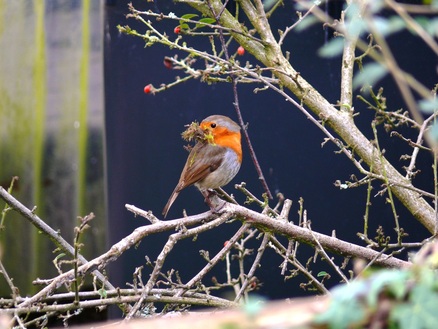
After more than a century the incumbent faces its first ever deselection challenge.  But with no fewer than nine others determined to unperch it, the robin - technically a "favourite" rather than a "national" bird - may yet consolidate its position thanks to a hopelessly split opposition.

The hen harrier is reckoned by some pundits to be the only candidate capable of uniting the Change movement. Centuries of prejudice could be swept away if the country elects its first hook-beaked national bird.

But the beak and claw faction is itself split, with the red kite, symbolising conservation success rather than continued conflict, also standing.
Vote here
The Kingfisher's position is deemed by many just too hard to pin down.  Flashing blue when it suits, it has been known to turn, revealing a distinctly reddish tinge at times. The unknown factor is whether the kingfisher's recent expulsion from the Oxford Junior Dictionary will win a sympathy vote.
robinphoto: Laurence Rose
Not helping the robin's cause is the recent emergence of the aptly-named blue tit.  Described as the Boris Johnson of the bird world, the cheeky chappie opportunist is hoping to gather the crumbs should the garden bird tendency turn away from their long-time favourite.

The mute swan's supporters are said to be panicking beneath the surface as floating voters are presented with too many options.  Meanwhile, the barn owl may have been knocked back by comments that "there is something of the night" about it.  Jibes such as "you kip in the day" may prove counter-productive in former tawny heartlands, however.

It may all come down to head-to-head debates, when powers of oratory can swing the undecided.  Here the mellifluous blackbird can be expected to pick up a few votes, the wren being thought of by many as a bit of a windbag.  In any case, expect much huffin' and puffin' over the coming weeks.

0 Comments

Punk-Disney cubist hobbit homes

9/3/2015

0 Comments

 
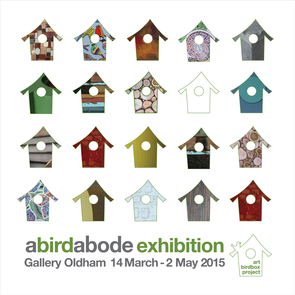
abirdabode
The abirdabode exhibition opens at Gallery Oldham on Saturday 14th March at 1pm and runs until 2 May.  The exhibition is linked with an Art Bird Flock of over three hundred Art Birds created by visitors to Festival Oldham, Oldham Flower Festival, Well Good Arts Week and RSPB Dove Stone’s Discovery Sunday last month.  

The Art Bird Box Artists include kids from Dove Stone Youth Rangers, Barrier Breakers, Grassroots Community Project and Trinity House many of whom will be at the opening.  They have been
 blogging about the project in the run-up to its launch and the project website shows youngsters making bird boxes inspired by punk, cubism, hobbits and Disney.

Project curators Jacqui Symonds and Richard Dawson have been running a series of workshops and creative activities for abirdabode; exploring urban and rural habitats, working closely with Oldham Arts Development and the RSPB.


0 Comments

Atwood calls for a new lexicon to challenge the Oxford Junior Dictionary

1/3/2015

0 Comments


Impromptu debate marks end of inaugural Festival week

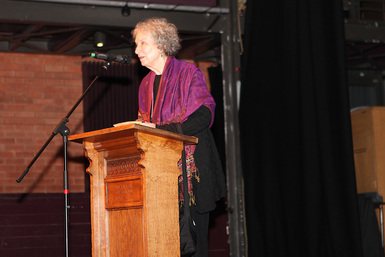
Margaret Atwood naturewords Margaret Atwood at The Norfolk Festival of Nature photo: Adam Shawyer
Margaret Atwood piled more pressure on the Oxford University Press in a surprise appearance at the Norfolk Festival of Nature on Saturday.  She gave an impromptu response to nature writer Mark Cocker’s address to festival goers, illustrated by a looped series of slides depicting nature words cut from the OJD.  She proposed that to ensure that words like acorn, bluebell, poppy and otter were not dismissed as irrelevant in children’s lives, a new book be produced that celebrated those words instead.

Mark Cocker had been speaking on the final day of the inaugural week of the Festival.  It is to be a year-round celebration of nature in the cultural life of the county, and of the country.  Starting with a week of literary, musical, visual and scientific exploration hosted by Gresham’s School, Holt, Festival events will tour the county hosted by organisations as diverse as the Norfolk Wildlife Trust, National Trust, RSPB, Writers’ Centre Norwich and Waveney and Blyth Arts.  The list of collaborators is expected to grow.

As Cocker spoke, his words were accompanied by a poignant exhibition of his own photographs, alphabetically cataloguing more than fifty lost nature words:  acorn, adder, bluebell, catkin....kingfisher, lark, magpie, newt, otter, poppy....

He then invited renowned Canadian novelist and Atwood’s partner, Graeme Gibson to respond.  His focus was on the need to ensure children grow up with a love and understanding of the countryside, before they become a generation of uncomprehending adults.  Margaret Atwood then reminded us of the interconnectedness of nature and human wellbeing; our dependence on the health of the oceans; and the fact that birds, in travelling the globe, give us “an overview of the entire web of life.”  Atwood, Gibson and Cocker are among 28 literary figures to have written to Oxford University Press in support of the #naturewords campaign.

PictureBluebell - an unimaginable omission
They, along with Festival Director Dr. Al Cormack formed a panel to take questions.  The first, from Jessica Lawrence, asked simply “which one word would you put back in the Junior Dictionary if you could?”

Atwood and Cocker both saw acorn as having the strongest symbolism – the seed of mighty oak trees, with their great cultural significance; Cormack felt it was unimaginable to omit Britain’s most popular flower, the bluebell.  Graeme Gibson, however, declared himself unwilling even to consider the question; for him, it wasn’t about trading odd words, but (he explained to me afterwards) about safeguarding nature literacy.

Guardian and Sunday Times coverage

Meanwhile, Saturday’s Guardian Review devoted two and a half pages to Robert Macfarlane’s magpie-like gathering of those dialect words that enable a forensic specificity in describing nature.  His article bemoans the impoverishment of nature vocabulary symptomised by the OJD word-cull.  In today’s Sunday Times, Bryan Appleyard interviews Macfarlane ahead of his forthcoming book Landmarks.  Appleyard cites the “disastrously edited” Junior Dictionary as an example of “virtuality replacing real contact with real things.”  Macfarlane tells him that some children are making and remaking our sense of place:  “I want to send people out into the landscape and down into the dictionary.”

#naturewords

0 Comments
<<Previous
Forward>>

    Welcome

    to 
    NATURAL LIGHT
    a site devoted to nature, and artists who are 
    inspired by it

    editor Laurence Rose

    Follow us on 
    Facebook and Twitter
    Email us

    RSS Feed

    Tweets by @Naturemusicpoet

    Archives

    October 2018
    September 2018
    May 2018
    January 2018
    December 2017
    November 2017
    October 2017
    August 2017
    June 2017
    May 2017
    April 2017
    October 2016
    July 2016
    June 2016
    April 2016
    January 2016
    December 2015
    November 2015
    October 2015
    September 2015
    August 2015
    July 2015
    June 2015
    May 2015
    April 2015
    March 2015
    February 2015
    January 2015
    December 2014
    November 2014
    October 2014
    September 2014
    August 2014
    July 2014
    June 2014

    Categories

    All
    Australia
    BBC Proms
    Biodiversity
    Birds
    Campaigns
    Cheltenham Festival
    Conversations
    Endangered Species
    Environment
    Fenland
    Festivals
    Flamenco
    Hear And Now
    Iceland
    Landscape
    Literature
    Moth
    Music
    Norfolk Festival Of Nature
    Olivier Messiaen
    Peter Sculthorpe
    Poetry
    Re:Tweet Of The Day
    RSPB
    Sibelius
    Soundscape
    Spain
    Ted Hughes
    The Long Spring
    Uplands
    Wetlands
    Words
    WW1

Powered by Create your own unique website with customizable templates.