Natural light
  • News and Blog

Inspired by swans - a hundred years on

21/4/2015

1 Comment


21 April 1915, Ainola, Finland

Today at ten to eleven I saw 16 swans. One of my greatest experiences! God, how beautiful! They circled above me for a long time. They disappeared into the haze of the sun like a gleaming silver ribbon. The sounds are like a kind of woodwind, the same as the sound of the cranes, but without the tremolo. The sound of the swans is closer to the trumpet, even if it clearly recalls the timbre of the sarrusophone. A low refrain, which is like the crying of a small child. Nature mysticism and the pain of life! The finale of the fifth symphony -

Picture
Legato in the trumpets!! This had to happen to me, who has been an outsider for so long. So I've been in a holy place today, 21st April 1915.
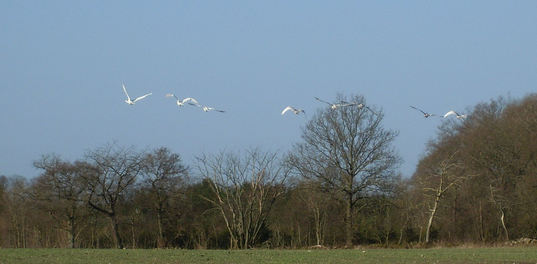
PictureFredrik Lähnn
Sibelius’s Fifth Symphony underwent the longest, most difficult gestation of all his works. He began composing it during the late summer of 1914 but made slow progress, writing in his diary, “It is as if God had thrown down mosaic pieces from heaven’s floor and asked me to put them back as they were.”

By April 1915 he was struggling with the finale, searching in vain for the theme that would bring the great work to a fitting conclusion.  The problem was solved on the morning of 21st when inspiration finally came with the spring arrival of Finland’s national bird, the whooper swan.

Sibelius 5th
Click the button to hear Stephen Johnson on Sibelius's 5th Symphony in BBC's Discovering Music series.
1 Comment

Vote blue, go grey

19/4/2015

0 Comments


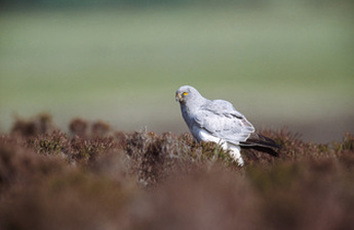
Why I voted for the bluebell and the hen harrier

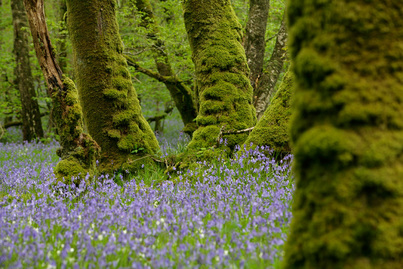
bluebellsAndy Hay (rspb-images.com)
As part of celebrations for its 25th anniversary, Plantlife has launched a poll to find the nation’s favourite wild flower.

One in five of Britain’s wild flowers is under threat and the vote is an opportunity to highlight their plight.  As with the concurrent election for Britain’s national bird, I have had no hesitation which gets my vote. 

The bluebell has previously been voted Britain’s favourite flower, and it’s mine, too.  But tactical voters should also vote bluebell.  While you can find them in neighbouring countries, the classic bluebell wood is almost uniquely a British sight.  Between a quarter and a half of all the world’s bluebells are found in Britain and Ireland.

However, during my recently-completed two year secondment in North Norfolk, I found a significant acreage of bluebells in the Snettisham area that was contaminated through hybridisation with the rampant Spanish bluebell.  It is a problem reported from most parts of Britain.  The Spanish species is a garden favourite which readily escapes into the wild.  It is more invasive and more vigorous than our native species, and hybrids even more so.

I have found that whereas the common bluebell takes around three years to flower from seed, a Spanish bluebell plant will flower in its first year, so the rate at which the native plants can be genetically swamped is frightening.  Whatever your views on non-native plants’ “right” to grow wild, the fact is, the common bluebell is more beautiful, more scented, and more part of our cherished woodland landscape than its paler, more rugged-looking cousin.

Picture
Andy Hay (rspb-images.com)
As with the hen harrier, which gets my vote in the National Bird Vote, there is a difficult conservation challenge to face.  There is just a chance that the necessary impetus to solve both will be helped along by declaring them our national favourites.

And unlike the Other Election, these are two polls where “none of the above” just doesn’t make sense.
Vote Favourite Flower
Vote National Bird
0 Comments

Re:Tweet of the Day - Northern cardinal

11/2/2015

0 Comments

 
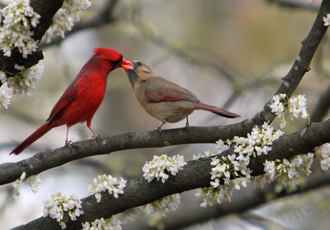
northern cardinal
Photo: Linda Hartong via Wikimedia Commons
This morning on Radio 4's Tweet of the Day, Michael Palin introduced us to the northern cardinal, a common bird of parks and gardens in North America. To hear the broadcast again, click the button.

 
Listen again
The northern cardinal is the state bird of seven states, more than any other species:  Illinois, Indiana, Kentucky, North Carolina, Ohio, Virginia and West Virginia.  Undoubtedly its familiarity and bright colouration are part of the reason, but it is also one of the most loved songsters in North America.  Both sexes sing clear, whistled song patterns, which are repeated several times, then varied.

According to Olivier Messiaen who has featured many times on these pages, it was his teacher Paul Dukas who told him, “Listen to the birds; they are great masters.”  He took the advice, and turned it into a life-long obsession, becoming an expert on bird song in the process.  Most of Messiaen's style oiseau music is the product of careful notation of the birdsong he encountered in the field.

However, Oiseaux exotiques (1955-56) cites no fewer than 40 different birdsongs from far-flung lands, all transcribed from recordings.  The work, in a single continuous movement, may be regarded as a sort of avian fantasy, but is really a sound fantasy—an exploration of timbres and rhythms where birdsong meets ancient Karnatic and Greek rhythms. The northern cardinal has a prominent role almost from the start.
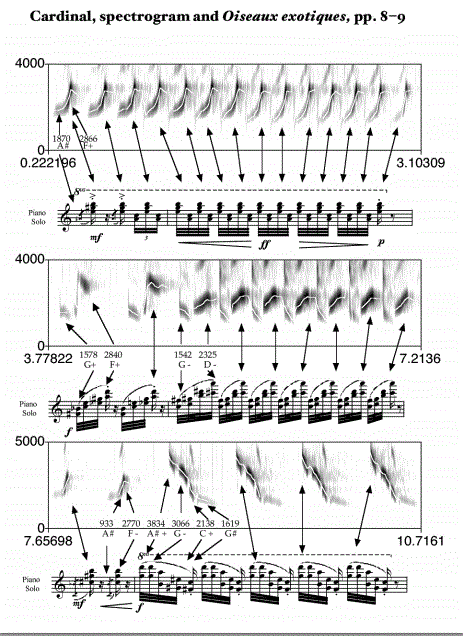
Robert Fallon is a musicologist based at Carnegie Mellon University, Pittsburgh.  He has made a study of Messiaen's transcriptions of birdsong and compared them with spectograms of the real thing.
northern cardinal
Copyright Robert Fallon www.robertfallon.org
In this superb performance of the first part of Oiseaux Exotiques, with Messiaen's one-time student Pierre Boulez conducting, and Pierre-Laurent Aimard at the piano, the first two fragments above are about 3 minutes in, and the third about twenty seconds later.
Finally, a chance to hear the bird for yourself:
I am grateful to Robert Fallon for permission to use the spectogram comparison diagram.  Rob's website contains a lot of interesting information and further examinations of other species.  Another comprehensive site for fans of Messiaen is run by Malcolm Ball at www.oliviermessiaen.org
0 Comments

World Wetlands Day

2/2/2015

0 Comments

 
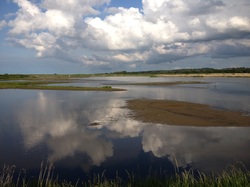
Titchwell Marsh copyright Laurence RoseTitchwell Marsh, Norfolk photo: Laurence Rose
For the past two years I have been privileged to work in one of the great wetland areas of the UK - the stunning North Norfolk Coast. During my time working with RSPB colleagues based at the Snettisham and Titchwell nature reserves I have witnessed the greatest tidal surge in living memory, marveled at spectacular flights of massed waders and geese, been excited by the appearance of rare visitors, and delighted in the commonplace.

Despite thirty years in a wide variety of conservation roles, from fundraising to international advocacy, I had never worked at the sharp end, on the ground.  So I jumped at the opportunity to be seconded to work at two of our top wetland nature reserves.

World Wetlands Day, on 2 February each year, unites all such places around the world.  It is a reminder that wetlands are among the most beautiful, vital and threatened places.  My secondment comes to an end in two months’ time and I have been reflecting on a host of memories.  I have a favourite, and it’s a simple one that could easily have passed me by on any other day:

Picture
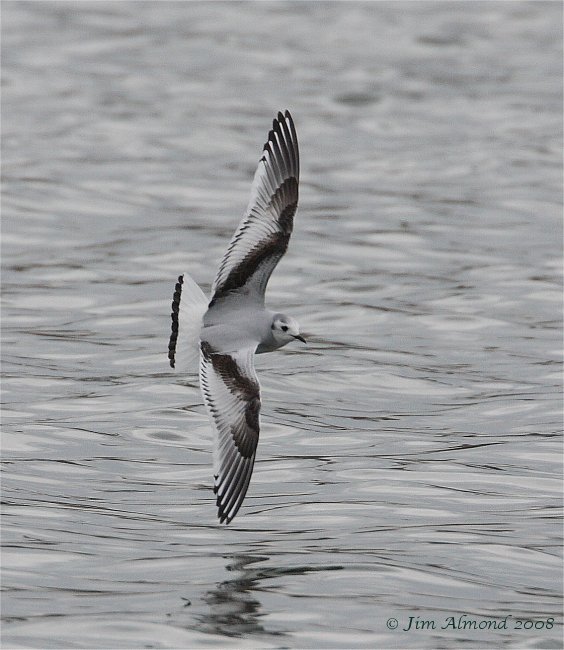
photo: Jim Almond http://shropshirebirder.co.uk/

A vision of Prospero's Ariel. The constant dancing flight of a Little Gull at #RSPBTitchwell

— Laurence Rose (@Laurence_R_RSPB) April 3, 2014
All experience of nature is about content and context.  Rarely would a gull be the headline act in the Infinite Variety Show, even if it is the world’s daintiest.  But it will have been the smooth light of the first after-work walk of spring; the sense of emergence that this always brings.  This would have made me stop to study closely how this swallow-gull would play the faintest breeze to gain advantage over the dizzy midges, and to make a feast of them.
A month later, the air over Titchwell was again the stage for a balletic battle, but this one an epic contest between two perfectly matched protagonists:

Hobby pursuing swift at #RSPBTitchwell utterly relentless, merciless, battle between supreme athletes. Hobby looking favourite into clouds

— Laurence Rose (@Laurence_R_RSPB) May 6, 2014

Norfolk Miniatures

To mark my departure from Norfolk I have been writing a cycle of nine piano miniatures.  None is much longer than a minute, and they will be for players of varying abilities.

For World Wetlands Day I am releasing the first, Reflected Sky. This is a computer rendition using sampled sound.  Get in touch if you'd like a copy of the sheet music.

The remaining pieces, all responses to moments spent in the company of nature in Norfolk, will be ready in March.  They include a piece that tries to capture the rolling, puppetic rhythm of that little gull's flight, and one that surges and crashes like the tide on the night of 5 December 2013.

For a celebration of more of the world's great wetlands, click here.


0 Comments

Big Garden Wordwatch

24/1/2015

0 Comments

 
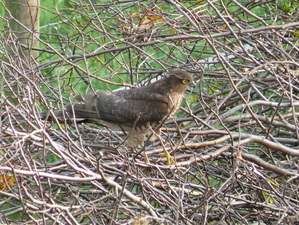
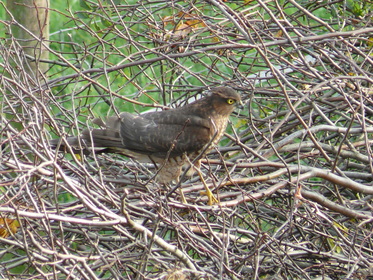
sparrowhawkSparrowhawk from the window by Laurence Rose
My writing room looks out on a garden, and then across fields, to a rising Yorkshire hillside streaked with the remnants of a snowscape that has all but vanished overnight.  I am vaguely getting my eye in for the RSPB’s Big Garden Birdwatch tomorrow, which has just been plugged by Radio 3.  At least 600,000 families are expected to join in, if recent years are anything to go by.

This annual celebration of the commonplace is one time when we reconnect with wildlife en masse. It is a positive that we can take out of the background trend of declining contact with nature; a note of hope that marks the end of a fortnight in which many of us have been reflecting on that sad and dangerous trend.

Positive News, the world’s first positive newspaper, can be relied upon to find inspiration in the loss of nature words from children’s vocabularies. Lucy Purdy, a London-based freelance journalist specialising in environmental and ethical issues, writes that “despite this, a new breed of writers and publications are using language, and new perspectives, to reinvigorate our relationship with the natural world.”

nature words in new internationalist
Lucy has written twice this week in response to our #naturewords campaign.  In New Internationalist Magazine, she surveys the current crop of nature-word champions like Dominick Tyler and Robert Macfarlane.  She concludes “At a time when systems and values crumble before us, using language to help craft a new story could be crucial. Words which stimulate and enrich. Our humiliated, hopeful humanness laid bare to the page.”

Dominick Tyler has himself been blogging about the Oxford Junior Dictionary.  Tyler’s  Landreader Project has been collecting words for landscape features, like jackstraw, zawn, clitter and logan, swash, cowbelly, hum and corrie, spinney, karst and tor.  Lucy Purdy describes it as a stirring synthesis of people and place. Already, more than 2,000 terms and words have been gathered, and in March Tyler will publish a book based on the project, titled Uncommon Ground.

In his latest blog, Tyler reflects on the list of words omitted from the OJD, which he considers as “a kind of prose-poetry supplement to be administered like a multivitamin as a defense against lexical malnutrition. Perhaps we can intone it to our children and, even better, seek out each of those things it names and show them.” 

Nature isn't an optional extra
Picture
Melissa Harrison writing in today’s Times explains why she put her name to a letter signed by 28 leading authors and thinkers: “to delist these words is to make the very things they represent begin to disappear because the process of putting words to things is how we begin a relationship with them.”

In Italy, English teacher and mother of twin girls Nadia Stevenson read about #naturewords with alarm, and wrote to author Rob Macfarlane, one of the twenty-eight who wrote to the Oxford University Press last week.  “I've been pondering all day as to what can be done. Although I'm just one small voice in the huge scheme of things, I have an immense love and esteem for the natural world of which we are part, as well as great hope for my daughters' futures.”

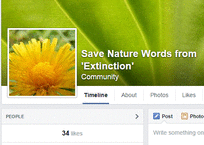
So two days ago Nadia set up a Facebook page Save Nature Words from Extinction.  On the page she writes:  “While we may choose to what extent technology is or isn't part of our lives, we cannot escape the fact that we ARE part of the natural world, it isn't an optional extra.” 

I'm hoping to see a starling
Picture
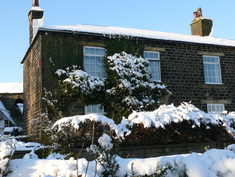
Glancing out of the window, I have to peer round the ivy I keep forgetting to trim, to get a full view of the garden.  There’s the gorse and the hazel and holly bushes I planted fifteen years ago, and the willows and ash trees that planted themselves a hundred years before.  A magpie flies past and I can hear a wren singing despite the double glazing.  I hope tomorrow there will be a starling for my Birdwatch hour.  They’ve dwindled here, as they have everywhere, and are mainly a summer visitor to this hamlet.  And I see how easy it is to write a paragraph about an everyday view in which all the nature words are on the cull list.
#naturewords
0 Comments

The Twelve Re:Tweets of Christmas

27/12/2014

1 Comment

 
Picture
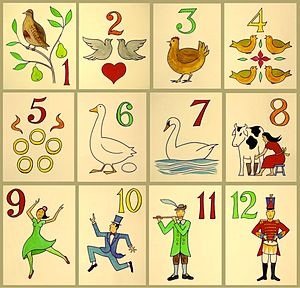
‘Tis the third day of Christmas and we should be due three French hens, to go with the two turtle doves and a partridge thus far accumulated.  But our friends at Radio 4 Tweet of the Day have decided to offer us an alternative shopping list to pass our true loves’ way.  Forget gold rings in these austere times, but greater riches are at hand:  a different bird species for each day from Christmas Day till Epiphany.  And what’s more, they’re all wild birds, none of your domestic fowl.  So out go the three French hens and in come three moorhens.  Click on the button for Radio 4's seasonal selection.

12 Tweets
The origins and meaning of the Twelve Days carol have been debated for centuries.  All sorts of symbolism has been suggested, and today’s lyrics undoubtedly include a few mistranslations and Chinese whispers.  Tomorrow, will you be getting four calling birds, or Radio 4’s suggested offering of four New Zealand Robins?  Or are you of the view that on the fourth day of Christmas only two brace of rooks will do?
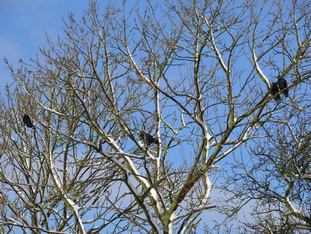
Rooks or colley birds by Laurence RoseFour colley birds this morning, West Yorkshire (Laurence Rose)
For surely those four colley birds – black as coal – were the same black birds as the four-and-twenty baked in another rhyme’s pie.  In other words, rooks.  In this typically Telegraphesque article you can read about how quintessentially English is the bird, how reassuring its return to the rookery in February, how dignified its bearing and how much fun it is to shoot and bake in a pie.

As for yesterday’s two turtle doves, why were they not in Africa? The most obvious explanation for this minor ornithological howler is that if you have a crotchet, two quavers and another crotchet to worry about “two squabs” doesn’t really work.  But why doves at all when the second day of Christmas has its own bird already?

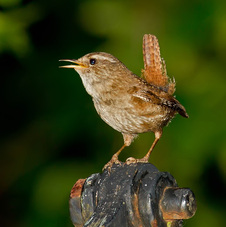
PictureWren ©Andreas Trepte/www.photo-natur.de
My version of the carol would have to depart from that of 1780 as early as day two, St. Stephen’s Day.  Saint Stephen, the first Christian martyr was said to have been betrayed by a loudly singing wren while hiding from his enemies.  Boxing Day was for centuries commemorated by Hunting the Wren, when boys set off to catch the bird and parade it around town, as described in the traditional "Wren Song". The Wren, the Wren, the king of all birds, St. Stephen's day was caught in the furze. Although he is little, his family's great, I pray you, good landlady, give us a treat. This almost certainly springs from a pre-Christian tradition, when wren feathers were given out before a voyage, to ward off disaster at sea.  In the Isle of Man Hunting the Wren persisted in some form into the 1930s, while in parts of France it continues today.

But perhaps the turtle dove should remain in the song for, whatever it may have symbolised in the past, it is now a symbol of something unattainable.  These days you’re hardly more likely to see this once common bird during the months it should be with us – April to August – than at Christmas.

It has been argued that the five gold rings once referred to pheasants, who bear a ring of white, not gold, feathers round their necks.  But the oldest known published version of 1780 illustrates the lyric with five rings and no pheasants.  The new BBC list goes for goldfinches at this point, and why not? From then on Radio 4 favours ornithological interest over any regard for a composer trying to set the lyrics: 

Six white-fronted geese a-laying
Seven mute swans a-swimming
Eight nightjars a-milking....

Come again?  Of course!  The old superstition that the night-flying, wide-gaped nightjar stole our goats’ milk from the very udder.  Clever.

Nine Andean cock-of-the-rock a-dancing
Ten manakin a-leaping
Eleven sandpipers piping....

Which just leaves my favourite – and I’ll explain why in a special Twelfth Night Re:Tweet – Twelve snipe a-drumming.
1 Comment

Young Poets Network - RSPB competition

14/12/2014

0 Comments

 
Young male sparrowhawk by Laurence RoseYoung male sparrowhawk by Laurence Rose
As the two organisations point out in their publicity to get young poets writing about nature, this is the time of year in which Tennyson’s phrase “Nature, red in tooth and claw” seems more than usually apt. 

The challenge is for poets aged 25 and under to write a poem about birds – anything to do with them. The YPN and RSPB suggest entrants read a 2009 article by Adam O’Riordan, about the enduring importance of birds to poets.


Why are poets so fascinated by birds?

O’Riordan provides a succinct survey starting with The Seafarer, the Anglo-Saxon poem of spiritual longing and exile.  In it, birds become “astringent emblems of solitude” as earthly pleasures are traded for the "the gannet's noise and the voice of the curlew" while the laughter of men is replaced by "the singing gull".

In the Sixties, Ted Hughes found in birds the symbols of his own concerns, first in the shining, terrible, power of The Hawk in the Rain whose "wings hold all creation in a weightless quiet" and later going as far as to forge his own gospel story in Crow. 
For Seamus Heaney the blackbird becomes a bridge to memory of his young brother's death in Blackbird of Glanmore "on the grass when I arrive / filling the stillness with life.”


The competition deadline is Sunday 1 February 2015. Entries may be a page poem written down, or a performance poem as a video or as an audio file. 
Competition details
Picture
Andreas Eichler creativecommons.org via Wikimedia Commons
Picture
One suggested source of inspiration is the RSPB’s Big Garden Birdwatch. To get involved, just pick an hour over the weekend of 24-25 January 2015 and go online to report what you see.


0 Comments

Re:Tweet of the Day - Bell Miner

17/11/2014

0 Comments

 
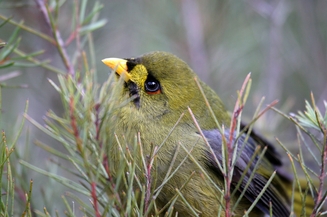
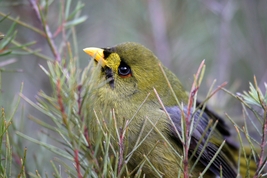
Bell Miner
Bell Miner by John Manger CSIRO
This morning Chris Packham presented the Bell Miner on Radio 4's Tweet of the Day.  Commonly known as the bell bird, it has prompted two very different musical responses.  You can hear the original broadcast by clicking on the button below.


Listen again
In 1894 the Australian Musical Album published "The Bell Bird, composed by Reene Lees who is not yet eleven years old". It is a piano exercise, and suggests she was doing well in her piano studies as well as showing promise as a future composer.

The National Library of Australia holds two other compositions by Reene Lees, but I have been unable to find any further reference to her, or to her music.

I have created a MIDI rendition of The Bell Bird in what may well be the world premiere recording, and possibly the first "performance" in over a century.  Unless anyone knows otherwise?

Please get in contact if you know anything about this mysterious young composer, whose unusual name means Melody.
More recently, in 2011 BBC Radio 3 commissioned Bell Bird Motet from Edward Cowie, whose work we featured a few weeks ago, and whose Lyre Bird Motet was one of our earlier Re:Tweets.

Like most of Cowie's choral work, it calls for the virtuosity of the BBC Singers.  Amid a whole ecosystem of unorthodox vocal sounds such as tongue-clicks and spoken rhythm, the female voices of the BBC Singers create a vibrant, bell-like heterophony.  It evokes a soundscape as experienced by Cowie at dawn in the forests of Eastern Australia.

Alongside the bell miner, the Motet enlists many more sounds of the wilderness, including several species of frog and other sounds inspired by this rich habitat.
in other news

Goldcrest song slowed down and translated into violin music sounds exactly like Bulgarian folk dancing #NatureMatters14

— NewNetworksforNature (@networks4nature) November 14, 2014
0 Comments

Guest blog:  Andrew Dawes on Tweet of the Day

8/11/2014

0 Comments

 
Andrew Dawes
Andrew Dawes produces of Radio 4's Tweet of the Day - World Birds, the ninety seconds of pure pleasure that many of us wake up to each morning.  It is also the source material for NATURAL LIGHT's Re:Tweet of the Day, exploring the connections between birdsong and the artists it inspires.

Andrew is also a Trustee of the Richard Jefferies Museum Trust. 

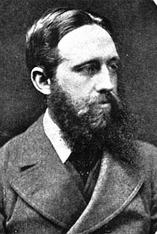
Richard JefferiesRichard Jefferies
It was one of our greatest nature commentators and writers Richard Jefferies (1848 - 1887) who wrote, in what would be one of his last essays, Hours of Spring: “It is sweet on awaking in the early morn to listen to the small bird singing on the tree. No sound of voice or flute is like to the bird.” Jefferies beautifully highlights that which nature writers, and indeed lovers of the great outdoors, have revelled in through the years, an encounter with wildlife, a timeless immersion within a ‘spirit of place’.  Almost 150 years later Radio 4’s Tweet of the Day humbly aims to provide that sweet awakening, in all its forms, for its many listeners around the world.

Where do I begin? Should I choose the most flamboyant birds? The most endangered? The anthropomorphic cute and cuddly, or even the fearsome and scary? Sir David Attenborough expressed at an early stage a willingness to record for the second series in July, which was delightful. However having begun working on the series in mid-May, this meant I had a first recording deadline with Sir David in just 9 weeks.

Luckily I had at my disposal the phenomenal team involved in the first series of Tweet of the Day, winner of the prestigious Broadcasting Guild Award. So we had a producer, writer, researcher and a script editor but as yet, no birds, and no birdsong.

Tweet of the Day planning focussed in on the 120 species I thought merited inclusion. The flamboyant instantly came into mind. Birds which bring wonder and glamour to the natural world; the blue bird of paradise, emperor penguin, blue footed booby, and resplendent quetzal slipped under the wire like ornithological limbo dancers. Others waited patiently in the wings as encore understudies. The New Zealand wrybill, the only bird with a bill curved to the right, or the Galapagos Islands blood sucking vampire finch for example.   I now had the birds, but what of the birdsong?
being paid to listen to birdsong was manna from Heaven
As the world’s leading wildlife production house, the BBC’s Natural History Unit has been to every corner of the globe. For two weeks I immersed myself in this vast catalogue of natural sound. As an avid birdwatcher being paid to listen to bird song was like manna from heaven. Amazingly though some species I desired were not in the BBC’s back catalogue. Enter stage left the Macaulay Library in America, part of the Cornell Labs of Ornithology. What the BBC didn’t have, Macaulay did. The series had hatched.
PictureBell Miner by John Manger CSIRO
We are roughly half way through the episodes. The series still excites me. It is what makes me rise from my bed at 5am most mornings to come into work. One hundred and eighty words, that’s all, roughly 60 seconds of speech. My passion is to let the birdsong breathe, to allow the listener to be transported to that country for a moment, to stop and above all listen. I hope I have achieved this. Certainly looking at the non-broadcast figures Tweet of the Day is now in the top 5 programmes being downloaded from the Radio 4 website across the UK. Worldwide, our listeners are growing steadily, with 150,000 daily subscribers to the audio server SoundCloud.

With just 120 bird species to choose from,  some listeners' favourites will of course be missing, yet I hope we have brought to the radio schedules the best of what the avian world has to offer; the spectacular, the bizarre, the songsters or in some cases those species we are about to lose forever. Above all for each species to warrant inclusion it had to satisfy an ultimate editorial driver – the voice of birds and our relationship with them. Tweet of the Day is about connection which leads to an awakening as to what is all around us. This is what drives my passion for this series.

As the airwaves crackle into life at two minutes to 6 each weekday morning, Tweet of the Day goes part of the way to proclaim that “…No sound of voice or flute is like to the bird”. I’d like to think Richard Jefferies would approve.

Andrew Dawes

Read more "countryside musings from a Northumbrian awake in the midst of a dream in the deep West Country" at Andrew Dawes' blog The Wessex Reiver

Andrew provides some further musings - from Marconi to Kate Bush - in his introduction to NATURAL LIGHT's Re:Tweet of the Day page.  Our next Re:Tweet will be the Bell Miner on 14 November.
0 Comments

Re:Tweet of the Day - Resplendent Quetzal

29/10/2014

0 Comments


The Re:Tweeting pyramid

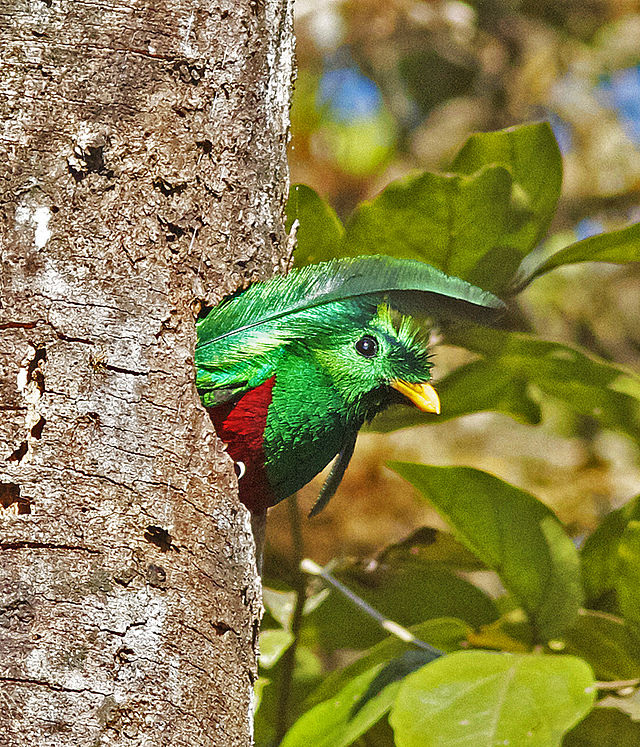
Resplendent Quetzal
Joseph C. Boone via Wikimedia commons


This morning Miranda Krestovnikoff presented a bird that has been legally protected for hundreds, if not thousands of years, and has been venerated as a god.  In the latest of our Re:Tweets we look at the resplendent quetzal of Central America.  Click the button to hear the original Radio 4 Tweet of the Day.


Listen again
...and from today, all our Re:Tweets are saved in the Features section - hover over the drop-down menu!
The resplendent quetzal was considered divine, associated with the feathered serpent god Quetzalcoatl by Pre-Columbian civilizations. Its iridescent green tail feathers, symbols for spring plant growth, were venerated by the ancient Aztec and Maya who believed the quetzal was the god of the air and a symbol of goodness and light. 

There is a theory that the Mayans built their pyramids to act as giant resonators producing strange echoes that imitate natural sounds.  At Chichen Itzá, Mexico, the main pyramid famously Re:Tweets the sound of a quetzal in response to a hand-clap, as demonstrated in the video.
The quetzal effect was first recognised by California-based acoustic engineer David Lubman in 1998. Nico Declercq of Ghent University was impressed when he heard the echo for himself at an acoustics conference in Cancún in 2002. After the conference, he, Lubman and other attendees took a trip to Chichén Itzá to experience the chirp of El Castillo at first hand.

Declercq's calculations show that, although there is evidence that the Mayans engineered the pyramid to produce surprising sounds, they probably couldn't have predicted exactly what they would resemble.  Declercq noticed that when visitors climbed the steps of the 24-metre high pyramid, the echoes seemed to sound just like rain falling into a bucket of water.

He suggests that this, rather than the quetzal call, could have been the aim of El Castillo's acoustic design. "It may not be a coincidence," he says, “the rain god played an important part in Mayan culture.

"Either you believe it or you don't." Declercq is now sceptical of the quetzal theory - not least because he has heard similar effects at other religious sites. At Kataragama in Sri Lanka, for example, a handclap by a staircase leading down to the Menik Ganga river produces an echo that sounds like ducks quacking. 
0 Comments
<<Previous
Forward>>

    Welcome

    to 
    NATURAL LIGHT
    a site devoted to nature, and artists who are 
    inspired by it

    editor Laurence Rose

    Follow us on 
    Facebook and Twitter
    Email us

    RSS Feed

    Tweets by @Naturemusicpoet

    Archives

    October 2018
    September 2018
    May 2018
    January 2018
    December 2017
    November 2017
    October 2017
    August 2017
    June 2017
    May 2017
    April 2017
    October 2016
    July 2016
    June 2016
    April 2016
    January 2016
    December 2015
    November 2015
    October 2015
    September 2015
    August 2015
    July 2015
    June 2015
    May 2015
    April 2015
    March 2015
    February 2015
    January 2015
    December 2014
    November 2014
    October 2014
    September 2014
    August 2014
    July 2014
    June 2014

    Categories

    All
    Australia
    BBC Proms
    Biodiversity
    Birds
    Campaigns
    Cheltenham Festival
    Conversations
    Endangered Species
    Environment
    Fenland
    Festivals
    Flamenco
    Hear And Now
    Iceland
    Landscape
    Literature
    Moth
    Music
    Norfolk Festival Of Nature
    Olivier Messiaen
    Peter Sculthorpe
    Poetry
    Re:Tweet Of The Day
    RSPB
    Sibelius
    Soundscape
    Spain
    Ted Hughes
    The Long Spring
    Uplands
    Wetlands
    Words
    WW1

Powered by Create your own unique website with customizable templates.