Natural light
  • News and Blog

Re:Tweet of the Day - Snow Goose

28/10/2014

1 Comment

 
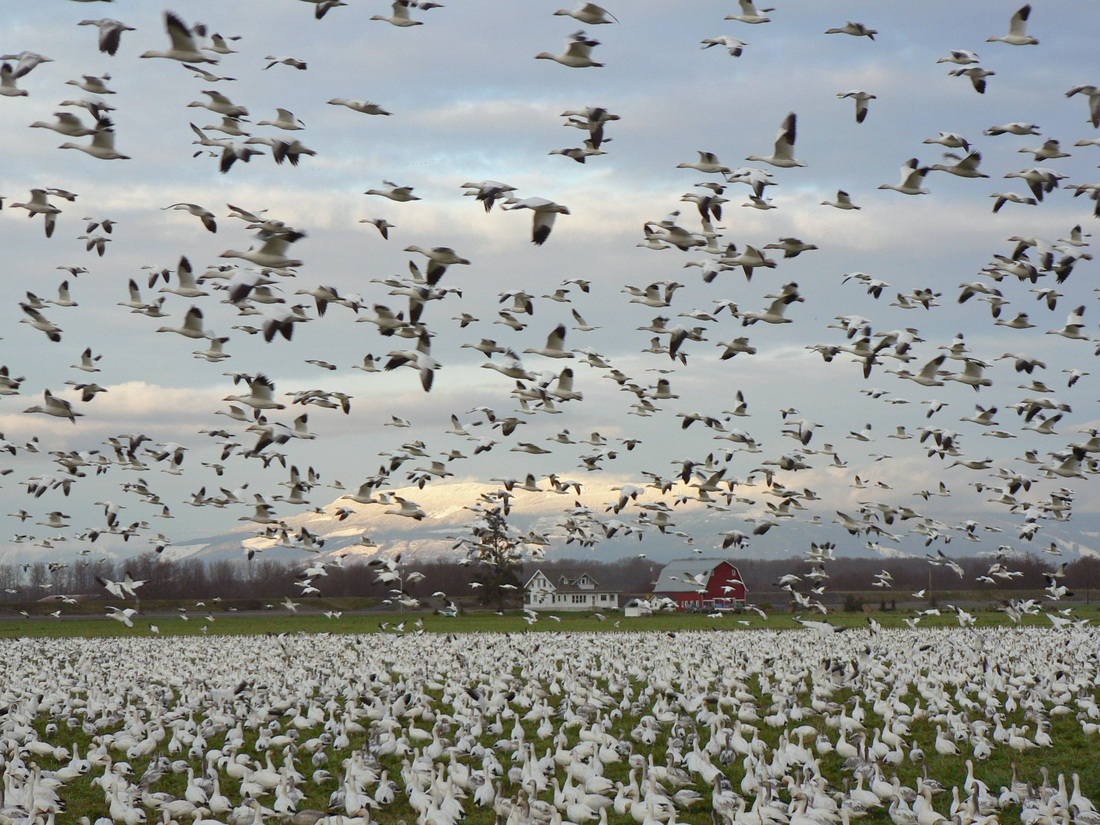
Snow Geese
Walter Siegmund via Wikimedia commons


This morning Miranda Krestovnikoff presented the snow goose of North America  Click the button to hear the original Radio 4 Tweet of the Day.


Listen again
In 1975 British progressive rock band camel released the instrumental, orchestrated concept album The Snow Goose, inspired by the Paul Gallico short story.  The album's success led to a sell out concert at the Royal Albert Hall featuring the London Symphony Orchestra.  Last year Camel came out of retirement with a concert at the Barbican Centre and subsequent European tour, performing The Snow Goose in its entirety for the first time since 1975.

Gallico's The Snow Goose is a parable on the power of friendship and love, set against the horror of war. It documents the growth of a friendship between Philip Rhayader, an artist living a solitary life in an abandoned lighthouse in the Essex marshlands, and a young local girl, Fritha. A wounded snow goose is found by Fritha and, as the friendship with Rhayader blossoms, the bird is nursed back to flight.  It revisits the lighthouse for several years on migration. Fritha grows up, and Rhayader and his small sailboat are lost in the Dunkirk evacuations.  The snow goose, which was with Rhayader, returns briefly to Fritha.  A German pilot destroys Rhayader's lighthouse and all of his work, except for one portrait Fritha saves after his death: a painting of her as the artist first saw her—a child, with the wounded snow goose in her arms.

Camel’s Music Inspired by the Snow Goose – to give it its full title – opens with recordings of marshland birds, in a section entitled The Great Marsh.  For the next forty minutes or so, the mood switches back and forth, tracing the emotional trajectory of the story.
1 Comment

Flamencos y flamenco

20/10/2014

0 Comments

 
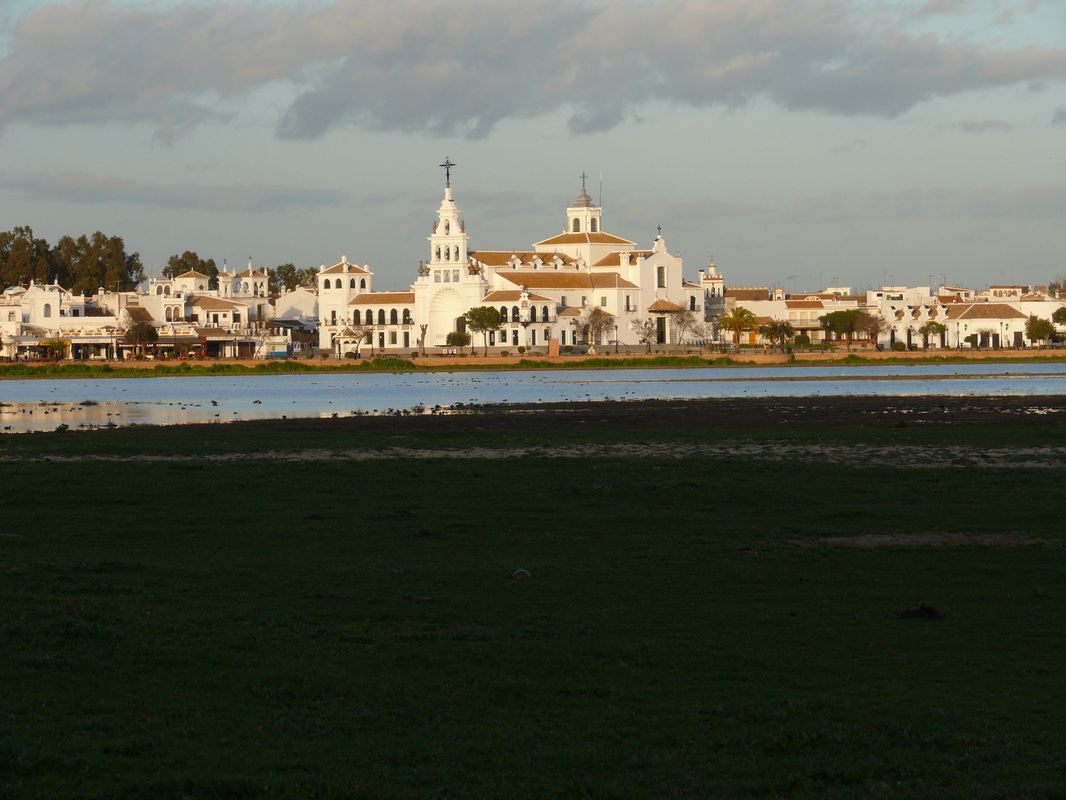
El Rocío by Laurence RoseEl Rocío photo: Laurence Rose
The Coto Doñana in Andalucía is where nature and culture hybridise like nowhere else I know.   This Saturday I shall be in Birmingham to speak at the RSPB’s AGM on Doñana:  Portrait of a Wilderness. 

The main point of the talk will be to illustrate the value of EU-level cooperation, supported by EU law, in conserving Europe’s most precious places.  This in the face of an onslaught by the UK Government, the new EU Commission and other short-term interests who are committed to watering down the protection afforded by current legislation.

It’s a subject I covered earlier this year in an episode of BBC Radio 4’s Costing the Earth, which you can hear by clicking the button:

Costing the Earth: Doñana
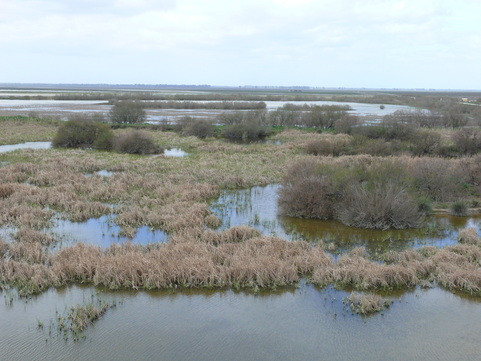
DoñanaLaurence Rose
For Costing the Earth, reporter Julian Rush and I met up in the village of El Rocío, on the edge of Doñana’s vast marshes, before driving off into the wilderness.  We wanted to see how Doñana had fared sixteen years since we last met there, when Julian was reporting for Channel 4 TV.

Back then, Doñana, indeed all Spain, was reeling from the country’s worst environmental catastrophe.  A reservoir containing highly toxic mining waste had collapsed, spilling 5 million cubic metres of lead, arsenic and cadmium-laden mud and acid water.  A tsunami of poison flowed into the River Guadiamar, one of the main sources of water for the marshes of Doñana, which lay some 45 kilometres downstream.

En route, the wave of mud and acid killed everything in the river, and spread over 4,500 hectares of farmland, which will never again produce food.  It flooded some of the most important bird habitat, killing all aquatic life and contaminating soils.  Plants absorbed the heavy metals, becoming toxic to anything that fed on them.

The full story, and its aftermath, is related in Costing the Earth.  What proved to be a short-term disaster had its silver lining.  With considerable EU financial support, the pollution was cleaned up.  The contaminated farmland was allowed to rewild and has become a green corridor linking Doñana with the Sierra Morena to the north, and hopefully, one day reuniting the fragmented Iberian lynx population.

On Saturday, I will touch only briefly on the other Doñana: the Doñana of music, dance and pilgrimage.  So this is my chance to celebrate the cradle of flamenco;  and how fitting that this is also the Spanish name for one of Doñana’s great symbols, the flamingo. 

Etymologists cannot agree on whether the bird was named after the gypsy dances recalled in its strutting, head-and-wing flicking display; or the other way round.  What is in no doubt, is that the marshes of Doñana and the surrounding provinces of Huelva, Seville and Cádiz, is where flamenco and flamencos are most at home.

During my thirty-odd visits to Doñana, over the last 25 years, I have been unable to disentangle my sense of the landscape, its smells, its sounds, its birds, its coarseness, its rhythms, natural and otherwise, its troubles and its blessings.  Nor, in the lyrics to the Fandangos de Huelva, the Sevillanas, the Soleás and all the other Andalucian song styles, does any such separation exist.

For this reason, re-reading my birdwatching notebooks covering a quarter century of visits, is to smell the tang of eucalyptus and to hear the insistent clapping – palmas -  of flamenco:

Walking back to the hotel...

....to the piping scops and the k’tocking red-necked nightjar
and half-asleep coots in the black marshes
and clapping.... clapping....

The many forms of flamenco are distinguished by the combination of rhythm and metre known as the palos.

Just as important these days are the other influences. Thousands of commercially-oriented pop-influenced flamenco songs have been released.  At their most extreme, these eliminate the microtonal inflections essential to authentic cante jondo (deep song).  They often introduce cheesy string sections, not to mention electric bass and drums.

Los Marismeños is a band whose name means the marshmen, and who sing about Doñana and its famous annual pilgrimage. They are at the commercial end of the scale but not horrifically so.  Here they sing Huelva, Donde el Fandango ha Nacio: Huelva, birthplace of fandango.
For a taste of the atmosphere in El Rocío during the Pentecost pilgrimage, here is a brief clip in which we hear a spontaneous Sevillana - a typical flamenco palos form you are as likely to hear in the street as in the concert hall.

And below, a field-and-studio remix. In these Sevillanas marismeñas - Sevillanas of the marshes, the electric bass is there, but so are those microtones.  The modern touches are respectful, and the uniquely expressive melody lines undulate like the dunes of Doñana against an Andalucian sunset.
The cante jondo approaches the rhythm of the birds and the natural music of the black poplar and the waves. It is a rare example of primitive song, the oldest of all Europe, where the ruins of history, the lyrical fragment eaten by the sand, appear live like the first morning of its life.  Federico Garcia Lorca 1931
0 Comments

Re:Tweet of the Day - Pied Butcherbird

13/10/2014

0 Comments

 
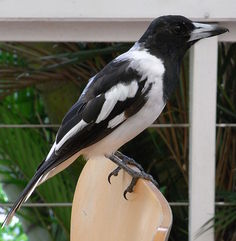
Pied ButcherbirdPied Butcherbird (Wikimedia)
A few weeks ago we Re:Tweeted the Australian magpie, and it’s back to the island continent for perhaps its greatest songster.  These two species create the sonic backdrop to so many Australian landscapes; it is not surprising that since the early twentieth century composers have been inspired by them.  


This morning Miranda Krestovnikoff presented the bird that has probably inspired more composers than any other non-European species.  In the latest of our Re:Tweets we look at the pied butcherbird of Australia.  Click the button to hear the original Radio 4 Tweet of the Day.


listen again
Indeed, birdsong seems to be an especially important influence among composers seeking to add a truly Australian voice to western tradition.  Henry Tate (1873-1926) actively encouraged this and two more generations of composers, from the late Peter Sculthorpe (1928-2014) to Brett Dean (b.1961) and John Rodgers (b. 1962) have appropriated birdsong and other natural sounds as a key ingredient in developing an Australian music that is today among the most vibrant and constantly evolving in the western world.

the pied butcherbird is a virtuoso of composition and improvisation
For Tate, the butcherbird was a particularly valuable resource.  “The slow and dreamy prelude of the butcherbird naturally expands into musical sentences.”  David Lumsdaine (b. Sydney 1931) has created recorded soundscapes, dance pieces and a string quartet based on butcherbird song.  He writes “the pied butcherbird is a virtuoso of composition and improvisation: the long solo develops like a mosaic, through the varied repetition of its phrases. In the course of the song, some elements remain constant, some elements transform through addition and elimination. The bird is a virtuoso of decoration: there is an extraordinary delicacy in the way it articulates the harmonic course of its song with microtonal inflections...”

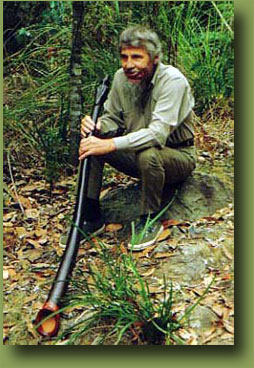
Ron NagorckaRon Nagorcka
There has even been a PhD thesis, by Hollis Taylor, on composers’ use of the butcherbird song, exploring whether birdsong can be thought of as music in its own right.  Taylor concludes  that the butcherbird’s “elaborate song culture seems to overreach biological necessity, indicating an aesthetic appreciation of sound.”

Composer, performer, and naturalist Ron Nagorcka (b. 1948) grew up on a sheep farm in Western Victoria.  Artamidae (2004) is his five-movement suite celebrating a family of Australian songbirds: the grey butcherbird, Australian magpie, black currawong, pied butcherbird, and grey currawong.  He uses a fretless electric guitar to achieve the particular microtonal details he identifies as just intonation - the natural effect of diving or multiplying pitch frequencies in simple ratios.  This makes butcherbird song sound slightly out of tune to western ears.

I’m not sure I agree with the analysis, but I do like Nagorcka’s idea that being literally in tune with nature (as opposed to western scales) is something a female listens for in selecting a mate.

perhaps the most magical sound found on the whole Australian continent
The last word should go to Brett Dean (b.1961) who, like Sculthorpe, often finds the music through which to express a deep concern for the environment.  His Pastoral Symphony incorporates a recording of the butcherbird.  Dean comments: “Sure, we all love nature, but what we love more are all the trappings of modern living... certainly more than the desire to stop and bask in the glory of a single butcherbird, perhaps the most magical sound found on the whole Australian continent. This piece, then, is about glorious birdsong, the threat that it faces, the loss, and the soulless noise that we're left with when they're all gone.”

0 Comments

Skydancer takes flight

3/10/2014

0 Comments

 
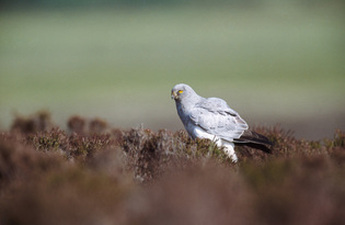
hen harrier
Any Hay (rspb-images.com)
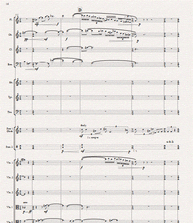
Skydancer (excerpt) by Laurence RoseSkydancer (frag.) by Laurence Rose
Skydancer is a name given to the magnificent and much-persecuted hen harrier.   NATURAL LIGHT featured this species on the inaugural Hen Harrier Day, 10th August, just two days before the not-so-glorious opening of the grouse shooting season. 


Persecution by grouse moor interests has made the hen harrier our most threatened bird of prey.

I'm looking forward to tomorrow's premiere of my Skydancer, a short piece written for the London Contemporary Chamber Orchestra. 

It's at 7.30 on Saturday at St.George the Martyr, Borough High Street
0 Comments

Ynys-hir artists at work

2/10/2014

0 Comments

 
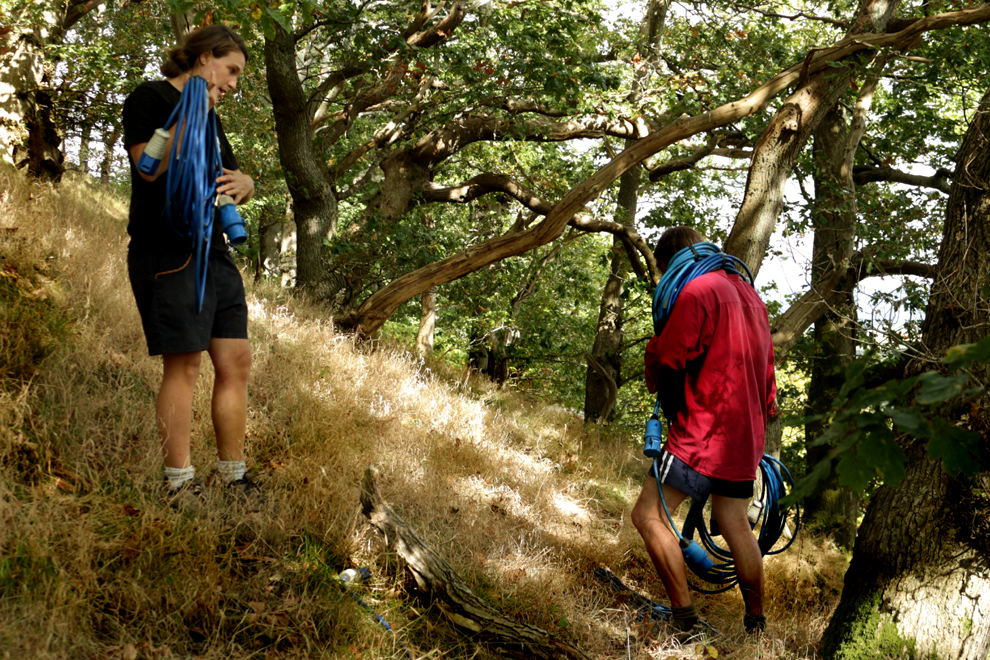
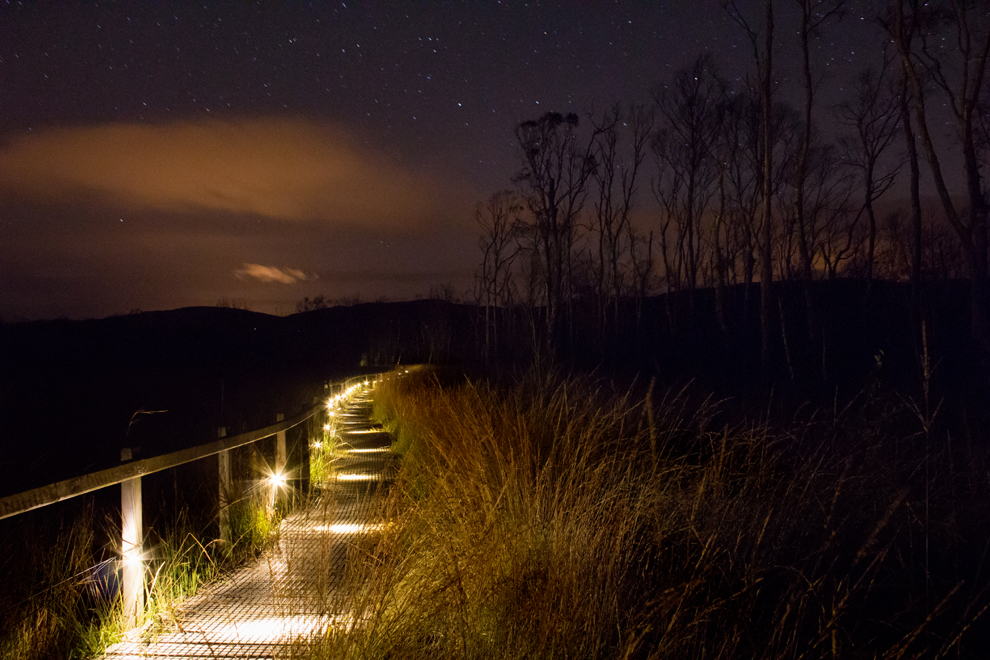
The stunning For the Birds installation at the RSPB reserve at Ynys-hir has been taking shape over the last few days, as these photos show.  The 2km night-time walk among thirty wildlife-themed artworks opens today and runs until 5 October.  
Lapwings by Jony EasterbyLapwings by Jony Easterby
For the Birds, a nighttime journey into a wild avian landscape.  New Site-specific works by sound and visual artists Jony Easterby, Mark Anderson, Kathy Hinde and Esther Tew at Ynys-hir RSPB reserve, Wales.

2-5 October, Ynys-Hir, nr Machynlleth, SY20 8TB

Booking details
NATURAL LIGHT spoke to Kathy Hinde a few days before she set off to install For the BIrds - read the conversation in full here. 
0 Comments

Migration metaphors

27/9/2014

1 Comment


A conversation with Kathy Hinde

Piano Migrations by Kathy HindePiano Migrations
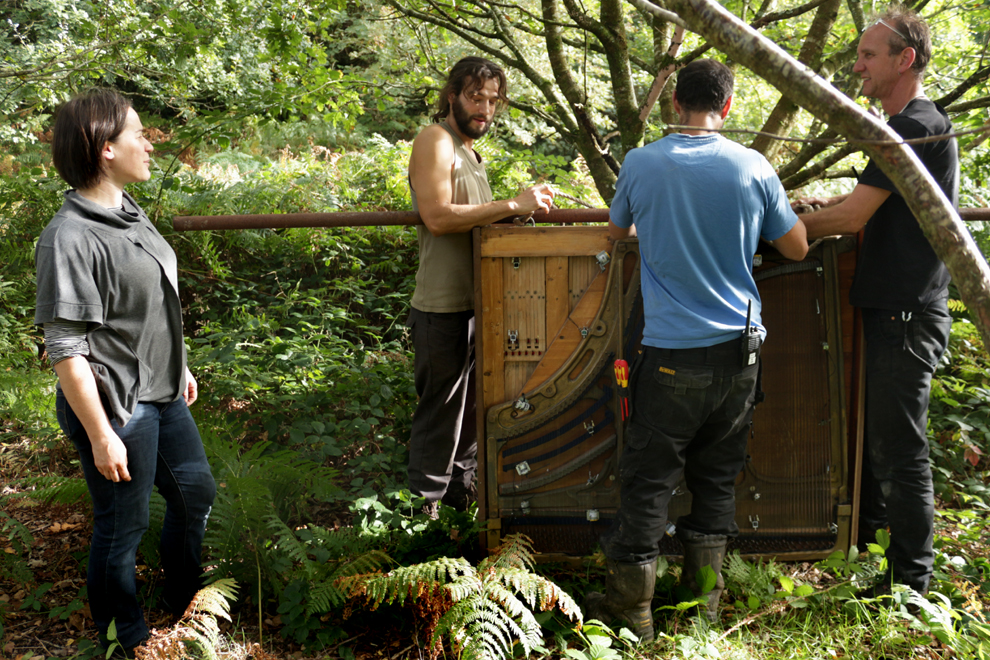
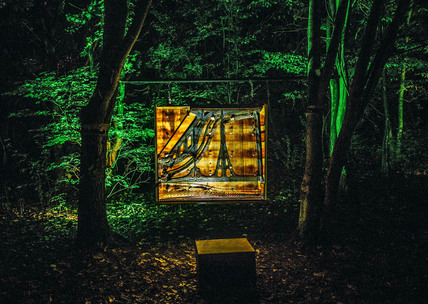
It is night. The inside of an old upright piano hangs in a tree.  Film footage of birds is projected onto it and their wing beats generate a continually evolving musical score. Their movement is registered by a computer that responds by activating an array of tiny motors.  These tap the strings at the very spot where the birds’ shadows fall.  It is as if the birds themselves were creating the delicate music that emerges. 

This is Piano Migrations, an installation by Kathy Hinde, one of four artists creating For the Birds a spectacular night-time trail of light, sound and sculpture at the RSPB’s Ynys-hir reserve from 2-5 October.

Using LED and small speaker technology the artists are pioneering a high impact low energy spectacle. A thousand lights will wind their way through the landscape, leading into a unique spectacle of reflections and artistic interpretations on the life of birds. 

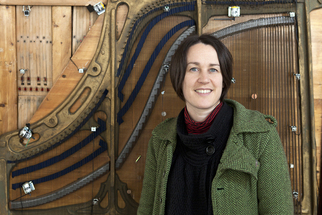
Kathy Hindephoto: Joe Clarke
I managed to catch Kathy during a brief stop-over at her Bristol studio, fresh from the 90dB Festival in Rome and soon to head off to Wales with a version of Piano Migrations and assorted other bird-related artworks.  “I’m surrounded by weird machines” was her slightly breathless greeting to my phone call.

I wanted to hear more about For the Birds.  “It was Jony Easterby’s idea. He lives near Machynlleth and knows the reserve really well.”

Easterby brought a number of regular collaborators together – Esther Tew, Mark Anderson and Kathy, to co-create a celebration of birds.  “We are all artists who work a lot outdoors, in the midst of nature” explains Kathy.  “We are installing about 26 artworks along a two-kilometre walk.  We’ve worked together for a few years and know instinctively how our works will complement each other.  We’ll be putting the trail together over about ten days and our walk-throughs will enable us all to refine each other’s contribution.”

As for Kathy, her input revolves around the recurring themes of her work: the mapping of migratory routes, the relationship between man and technology and the effects of environmental change on nature.   Piano Migrations is a characteristic fusion of natural processes, low-tech and high tech.  “It changes all the time.  Wherever I take it I ask them to find me a ‘new’ broken piano so the sounds are always different.  And I love it when, as recently in Bavaria, they re-use the piano frame in an entirely different artwork afterwards.”

Using software developed by her partner Matthew Olden, Kathy experiments with different films of bird flight to create new versions.  “The first version used film I shot of house martins on telegraph wires.  It looked like music on a stave and that’s how the idea came to me.  I like to create systems that have their own behaviour – I compose by setting up the system but the actual music comes from the behaviours I can’t control.  The original house martin version of Piano Migrations is completely different to using film of cranes, which produce a much more graceful rhythmic pattern.”

I love the whole idea of migration, and there being no borders.  There are lots of lovely metaphors
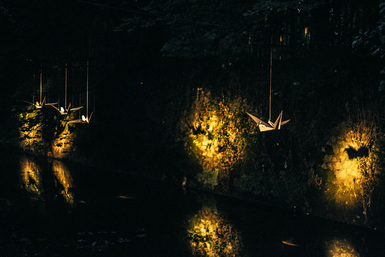
Origami cranes by Kathy HindeOrigami cranes
I’ve noticed that cranes seem to feature a lot in her work, and I ask which came first, an interest in birds, or did that emerge through her art?

“I always spent a lot of time outdoors as a child, always in the woods.  But really my interest in birds has grown around my artistic practice.” 

And what is it with cranes?  “We made origami cranes at school and I loved it, I’ve been doing it ever since, making them flap their wings and everything.  Then in 2010 I spent sixteen hours in a hide in Hornborga, Sweden, with real cranes all around doing their dancing displays a few feet away from me.  One of my installations at Ynys-hir will be stainless steel ‘origami’ cranes with motors to make them move and lit up with special lighting.”

 “I love the whole idea of migration, and there being no borders.  There are lots of lovely metaphors.” Kathy then reveals that her great-grandmother was a migrant - arriving in Britain from Lithuania in 1901. “And my grandmother sold pianos in Wigan, so these connections mean a lot to me.”

I want people thinking about the sights and sounds of nature in different ways
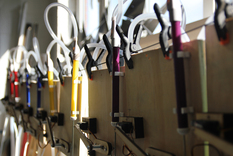
Bird-imitating machine by Kathy HindeBird-imitating machine
So what other weird machines will she be taking to Wales? “I’m working on a bird imitating machine using Swanee whistles whose tails are controlled by computer.  I’m composing a piece for this machine but the prototype still needs improvement.”

It is only late in the conversation that I realise the Ynys-hir installation is for visiting after dark. “Ynys-hir has these amazing vistas over the estuary but we want to bring it to life at night, and create a different feel.

“I want people thinking about the sights and sounds of nature in different ways...”

“You seem to want to magnify everyday experiences of nature” I suggest. 

“Exactly, that’s a good way of putting it.  My motivation is to imbue a desire to care for the environment, but it’s implicit in the work that I make, it’s not something that I preach.  People have to get there themselves.”


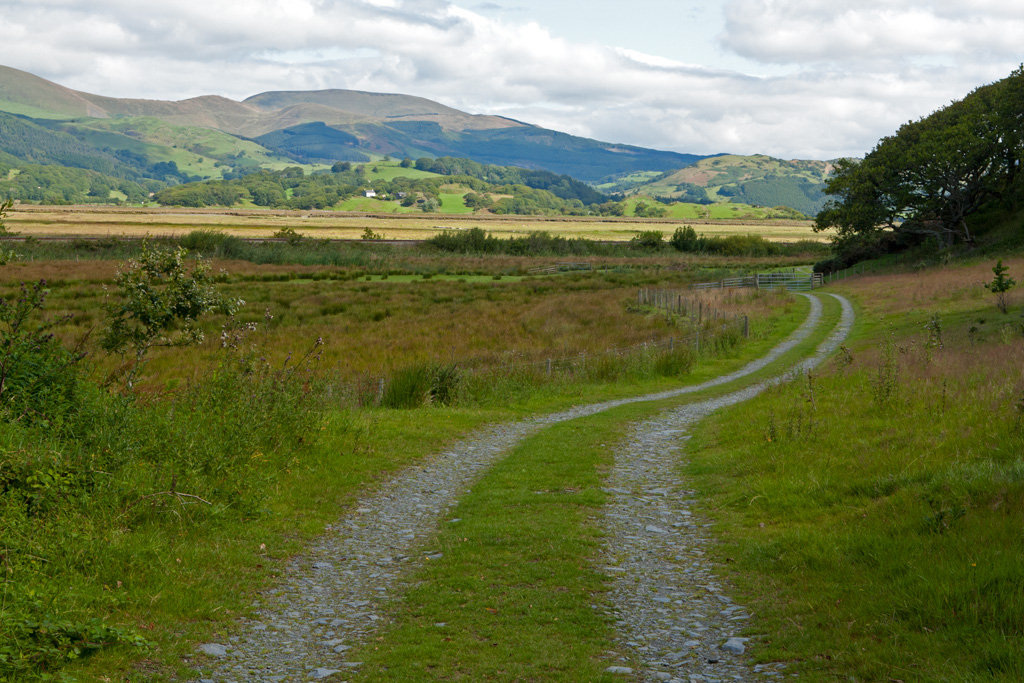
Ynys-hir RSPB reserveYnys-hir RSPB reserve
For the Birds, a nighttime journey into a wild avian landscape.  New Site-specific works by sound and visual artists Jony Easterby, Mark Anderson, Kathy Hinde and Esther Tew at Ynys-hir RSPB reserve, Wales 

2-5 October, Ynys-Hir, nr Machynlleth, SY20 8TB

Booking details

Read More
1 Comment

Re:Tweet of the Day - Lyrebird

18/9/2014

0 Comments

 
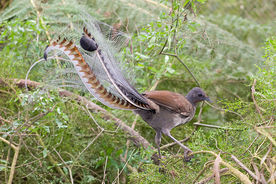
Like millions of people, I first heard the incredible song of the Lyrebird courtesy of David Attenborough’s Life of Birds series back in 1998.  Those few minutes of expert mimicry have been voted one of the most popular wildlife clips ever.  This morning Sir David presented this wonderful songster on Radio 4's Tweet of the Day.

Listen again
Superb lyrebirdFir0002/Flagstaffotos
Unsurprisingly, the lyrebird features in aboriginal Australian music, in what may be a continuous tradition lasting tens of thousands of years.  Matthew Doyle, a composer and dancer of aboriginal-Irish descent, continues this tradition in a series of pieces for voice, didjeridu and percussion, issued on a CD entitled, simply, Lyrebird.

A composer who famously appropriated birdsong into many works was Olivier Messiaen, and later composers such as Harrison Birtwistle have claimed that his Messiaen’s style oiseau had a direct and lasting impact on modernists searching for more naturalistic – or at least less formal – musical structures.  It is perhaps fitting that Messiaen’s last completed work should incorporate the bird widely regarded as having the most extraordinary song of them all.

Éclairs sur l'au-delà… [Illuminations of the beyond…] is an orchestral piece composed in 1987–91.  Messiaen visited Australia during that country's bicentennial celebrations in 1988, enabling him to use the sounds of Australian birds notated in the wild.  The third of eleven movements is called L’Oiseau-lyre et la Ville-fiancée [The Lyrebird and the Bridal City].  Whereas traditional Australian music features vocal and didjeridu imitations of birds, Messiaen's works attempt to reproduce the extreme complexity of bird song through notated music.  L'oiseaux-lyre et la Ville-fiancée is among his most complex, with 67 changes of tempo and a dizzying variety of motifs.

Someone who knows these birds and their songs well is the composer Edward Cowie, who was interviewed by NATURAL LIGHT a couple of weeks ago.  He spent twelve years in Australia in the 1980s and 90s and describes an evening sitting at the edge of a cliff overlooking the King Valley in Victoria.  “Just as the light finally dipped towards an inky darkness, several male lyrebirds began to sing in a series of interlocking but combative ensemble performances”.   Cowie often contrasts himself with Messiaen:  he doesn’t attempt to note, and then notate, the exact rhythms, pitches and timbres of the bird.  He is more interested in natural sound as part of an overall experience of a landscape, a place, a moment.
For me, Lyre Bird Motet captures that smoky valley in Victoria wonderfully.  Cowie uses rather dreamy harmonies from one part of the chorus to suggest a balmy dusk scene while the other singers, like a real evening chorus, are all (seemingly) independent soloists, bringing bursts of sound, or maybe shafts of light, into the dim, cool forest.

This morning, on Tweet of the Day, we heard how the Lyrebird – a bit like Edward Cowie - is an avid borrower of sound, listening, choosing, and replaying echos of its own immediate environment. 

Recently, while preparing a talk about birds and music, I ran a search for samples of lyrebird song.  The best was from a captive bird in Adelaide Zoo.  The lyrebird enclosure was in need of repair and a pair of local builders had been brought in.  Some days later Chook, the dominant male lyrebird, gave a recital of his latest composition, based mainly on the sounds he had borrowed from the builders.  In a remarkable recording we hear the hammering of a hammer, the whirr of an electric screwdriver, a power drill, and an old-fashioned hand saw cutting through a plank.  We also hear one builder greeting the other and we can surmise that Chook’s neighbours included a whip-bird and a kookaburra, because we hear a perfect imitation of them both – simultaneously!
Update:  Edward Cowie's Lyre Bird Motet will be part of the BBC Singers' 90th birthday celebrations next Wednesday 24th September, St. Giles Cripplegate, London 6pm.
0 Comments

Marshsongs: celebrating the Trent marshes

10/9/2014

0 Comments


A guest blog from Michael Hatfield

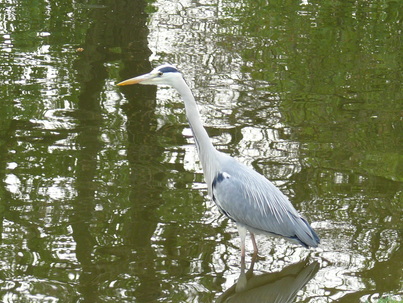
Grey heron by Laurence Rosephoto: Laurence Rose
The RSPB Beckingham Marshes reserve on the River Trent commissioned Kerry Greenwood and the Kismet Theatre Company based in Gainsborough to create a theatrical performance to raise the profile of the site and let people know about what a great place they have on their doorstep. Marshsongs, written by local playwright Michael Hatfield is a journey through the history of the marshes.  It will include scenes created by local community groups, inspired by their own visits to the site, as well as specially created visual arts, music, poetry and song. 


NATURAL LIGHT asked author Michael Hatfield to share his experience of the project:

Meeting one with Director Kerry Greenwood.  A lovely meal, followed by a comprehensive destruction of every scene, every idea. There were funny scenes, clever ideas. But Kerry clearly identified the problem- it was a generic script, exploring different time periods and various animals and situations. But it wasn't rooted in truth. She gave me one principle to follow which made all the difference "Make it specific to the place. Make it true. Go back to how you felt when you visited the marshes"

When we visited the marshes, my first impression was of a big flat empty field. But as we walked around, I began to notice small things: frogs underfoot, hovering dragonflies, beautiful blue unnamed insects, lapwings flying overhead. And suddenly, I was lost in a world within our world. Here was a universe beneath our feet and over our heads. I loved the feeling that the world was shifting around me and growing wider and deeper by the second. I wanted to recapture that emotion- like falling into a microscope and feeling a tiny being in an infinite cosmos. 

But a play has to be about stories and people. So the research began. Local history, websites, records, talking to local people.  What was the story I wanted to tell? What needed to be told?

What struck me was that almost every story about the relationship between Man and Nature was about Mankind's destruction of the natural order. But here, here in Beckingham Marshes, the reverse is the case- the development of flood plains (to protect Mankind) had enabled the creation of a wetland reserve, bringing back ancient habitat and ancient animals. A true kind of symbiosis. Real progress.

The next meeting with Kerry was electric. We both knew we had found the key. Real history, combined with poetry and magic would create a timeless piece of drama. Time to get to work. 

Daft Annie's speech reflected the way I felt that day in the marshes...
We met to discuss what time periods would work best for an audience.  Prehistoric, Vikings, Enclosures. Next Victorian Willow Working women, earthy, funny, but also touching. And a character, Daft Annie who doesn't respond to people but the natural world.

Daft Annie's speech reflected the way I felt that day in the marshes...

ANNIE: Lapwing flies, rolls and dives, splitting the sky in two. Slow wing flapping, too slow to keep them in the air. Looks black above and white below. Look closer, mother! Iridescent dark green and purple, shines above. The legs are pink. The under-tail is orange brown. A rainbow in a bird, a riot of colour. But you only see in black and white.
Picture
photos: Ruth Pigott
Curlews wade, mud-lovers, mud-hunters, searching, searching, spiked bills piercing the hot sticky ground. Scimitar carves the air. Worms wriggle in the air. He waddles off. Drumming, drumming, the snipe are drumming. Feathers humming. Show offs. It's the men. Always the men. Showing off. Fly high in the hand of God, then down, down to the ground. Wagtails, water pipits... The flash of yellow. Yellow hammer! Little bit of bread and no cheese. Little bit of bread and no cheese. Every song is different. Listen to the boys singing. Yellow breast and head of solid gold. Yellow hammer.
Picturephoto: Robin Booker
Then the local Performing group PACS to represent the animals, then local writers and poets to have their poems read.

The second half moves into the Twentieth and twenty first century. In a swift succession of scenes we visit the Marshes in 1940, 1947, 1977, 2000 and 2007. We see the devastating impact of floods and storms over the years, and how Marsh Folk cope. 


And finally, a reminder of the devastating impact destruction of habitat has on the natural world.  We don't want the audience to be spared the realities. And then end with a joyous celebration of the renewed Marshes as a partnership between Man and Nature.

MARSH: Life is born, life ends. That’s the way of things. I don’t overcomplicate. The small things live in me, they grow. Look closely- you will see a world within the world.  A daily struggle for survival.

The world of the insects, the microscopic world. You need to see with new eyes. Here’s warfare, kill or be killed. Progress.

Mankind builds. They make. They construct. And they call this progress. They build walls and fences, to close me in. They call this ownership.

That's the plan - a show that begins in prehistory and ends in 2014, a show that is specific to the history of people and places around Beckingham- but which touches on the transcendental and universal. A combination of music, movement, drama and poetry which might just make people feel the way I did, stood in a muddy field in silence, touching hands with the infinite.

Michael Hatfield

Michael Hatfield is a local writer who has written adaptations of Mediaeval Mystery Plays, a seventh century Spanish drama, pantomimes, Youth Theatre plays, and song lyrics.
Beckingham Marshes
Marshsongs will be performed on Friday and Saturday 19 and 20 September, 7.30 pm at Beckingham Village Hall, Notts and on Friday and Saturday 26 and 27 September, 7.30 pm at Gainsborough Old Hall, Lincs.  Booking recommended 07756 500292

0 Comments

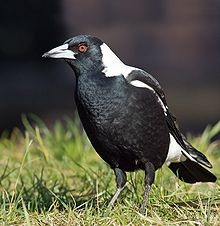
Re:Tweet of the Day - Australian Magpie

7/9/2014

2 Comments


Welcome...

...to a new occasional series that takes the subject of the morning's Radio 4 Tweet of the Day and explores music inspired by that species.  This morning, Sir David Attenborough introduced us to the Australian Magpie.
Listen again
Picture
It is difficult to imagine a composer taking our magpie’s song as a starting point for a piece of music, but the Australian version’s melodious song with its clearly pitched notes is celebrated by several including John Rodgers and Ross Edwards, two Australian composers who often feature bird songs in their works.  British composer David Matthews describes how friends he was staying with introduced him to the song of their resident magpie.  He wrote down this haunting song, hoping to use it in some way. Later he noted down three more songs, two of them distinctively melodic. The koel, a large Australian cuckoo, had just arrived for spring - and sang day and night.  The pied butcherbird sings three notes on different distinct pitches. Lastly, the eastern whipbird has a crescendoing high note followed by an extraordinary, loud whip-crack.   From this material Matthews wrote Aubade, for chamber orchestra. It develops the initial eight notes of of the Australian magpie’s song into a long violin melody which is later reprised on the cello.

Matthews says "My recent music has become more diatonic, and I have been using folksong in some pieces, and incorporating birdsong into others. Landscape and the natural world have always been important stimuli for my music".

Michael Kennedy, writing in the Sunday Telegraph in 2001 described Aubade as “an appealing essay in the honourable English tradition of short nature pieces – rather like a present-day equivalent of Delius’s First Cuckoo.”


2 Comments

Okavango to get the Cowie treatment

6/9/2014

0 Comments


A conversation with Edward Cowie

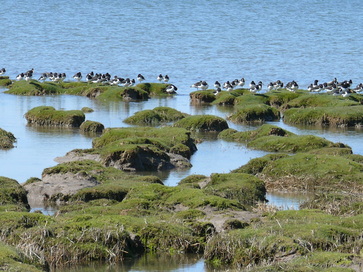
PictureHest Bank photo: Laurence Rose
On a cold November morning in the late 1970s a small group of us assembled on the shores of Morecambe Bay, near the village of Hest Bank.  We were there to meet the high tide wader roost, a host of oystercatchers and ringed plovers, in order to net them, ring them and release them as part of a long-term research project into long distance migration.

One of my fellow ornithologists was Edward Cowie, then Associate Professor of Composition at the University of Lancaster, where I had just enrolled as an undergraduate in biology.

From then until Edward’s move to take up an academic post in Australia in 1983, we would encounter each other at bird club meetings, in the field and at concerts.  Our conversations were most often about birds, but sometimes about music.

As for Hest Bank, it was to be the inspiration for an early but already characteristic Cowie piece – an eponymous movement from his Gesangbuch, a cycle of virtuosic choral works written for the BBC Singers.  Cowie’s Hest Bank captures in sound a rippling, surging, swirling, murmuring, flowing and ebbing of vast flocks of knot, dunlin and other waders; of water, surf and flotsam; of light and of landscape.  


One of the things I like about being a composer is it always takes me somewhere strange
I caught up with Edward as he was preparing for a trip, with his partner, the artist Heather Cowie, to a very different wetland.  They are spending the rest of September in Botswana’s Okavango Delta, where Edward will be researching new pieces with the support of a Leverhulme Emeritus fellowship.  Surprisingly, it is Edward’s first visit to tropical Africa.

“One of the things I like about being a composer is it always takes me somewhere strange.  I don’t know how I will react but I know it will be the whole interlocking tapestry that will impress me:  the sky, the flatness, the wetness.”

He knows enough about what to expect to have decided how he intends to work.  One of the main outputs from the trip will be Okavango Nocturne.  It will be the second in a cycle of orchestral works with the overarching title Earth Music.  The first was Great Barrier Reef, commissioned by the BBC Proms and premiered there last year.

“I’ve heard that the Okavango has a very special night-time atmosphere, full of sound coming from millions of animals of all kinds.  I’ll be out there listening very carefully to a habitat that can’t be seen, only heard.”   Okavango Nocturne will be premiered in the 2015/16 season.

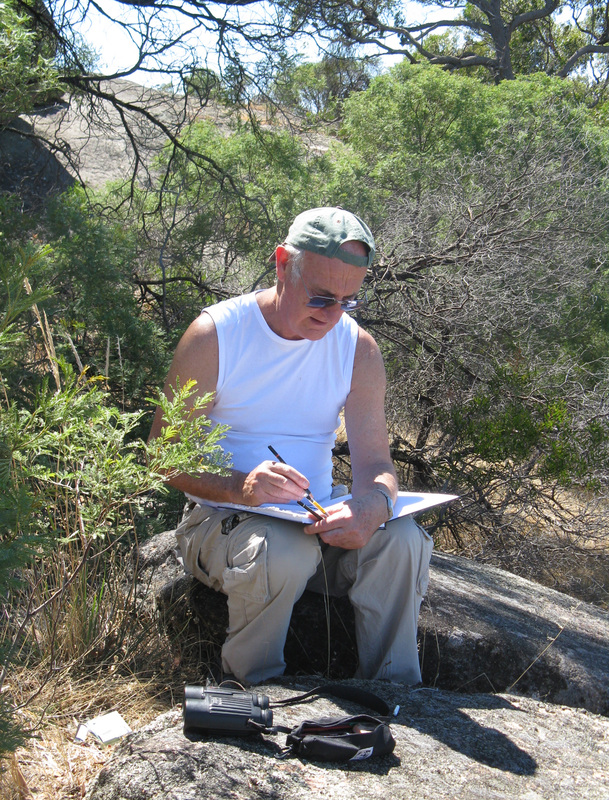
I remark that his search for some special magic in the Okavango is characteristic, something he has been doing for years in the wild places of the world.  He agrees and explains that in Australia he often spent long periods alone in wild areas, contemplating and exploring nature and the sonic and visual experiences it affords.  He describes an evening sitting at the edge of a cliff overlooking the King Valley in Victoria. 

“Just as the light finally dipped towards an inky darkness, several male lyrebirds began to sing in a series of interlocking but combative ensemble performances”.   He was captivated by the sounds, but also by the whole experience:  the changing light as dusk falls; tracing wisps of smoke that perforate the forest canopy, the valley landscape enclosing this world of sound and atmosphere.

The result of that experience was one of his best-loved pieces, Lyre Bird Motet (2003), written for the BBC Singers.  A return trip to Australia a few years ago led to a companion piece, Bell Bird Motet, premiered in 2011 by the BBC Singers at the festival Earth Music Bristol which Edward founded.  

Edward and Heather Cowie are both renowned visual artists whose shared passion for landscape and nature finds its way onto canvas.  Heather has started to envision Okavango swamp pieces "but who knows what Botswana will really inspire when we get there." 

Picture
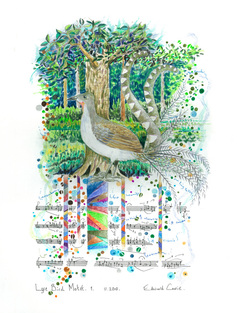
Edward Cowie, Superb Lyrebird
Picture
For Edward, drawing is an integral part of music composition.  “I’ll be taking a manuscript book to note down the sounds that I hear, but the visual dimension is important – even in the dark.  Composition is for me ‘multi-sensing’ – I draw to capture shape, form, complexity versus simplicity, colour and ‘event.’  I add real musical notes in the drawings if I need to, and then start translating it all into the music."
Picturephoto: Luca Galuzzi www.galuzzi.it
Our conversation runs like a river in spate, with unexpected turns and splashes.  Suddenly we are discussing the recent discovery of the phenomenal song repertoire of the spiny lobster.  It turns out Edward is working on an Australian Broadcasting Corporation radio series called Singing Planet.  It’s a natural history of song “from crustaceans to the contemporary chorus.”

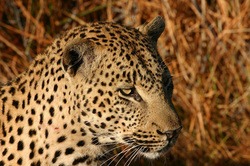
We return to the calmer waters of the Okavango and Edward reveals plans for another Botswana project - researching big cats for a piece for clarinet quintet.

“I recently got to know [British clarinettist] Julian Bliss and have been bowled over by his playing – it’s great to hear someone so young display a totally unmediated love of sound”  he enthuses, "and it turns out Julian is seriously keen on wildlife.  I’m writing a clarinet quintet for him, so I asked him what subject he’d like me to focus on and he immediately said ‘big cats’.  So the piece will be called Big Cats.

“I have millions of reasons to compose music, and they are mainly, if not totally, found within the way the natural world works.”

Laurence Rose


Picture
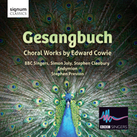
Gesangbuch: choral works by Edward Cowie is available on Signum Classics and includes Hest Bank from the Gesangbuch cycle, Lyre Bird Motet and Bell Bird Motet.


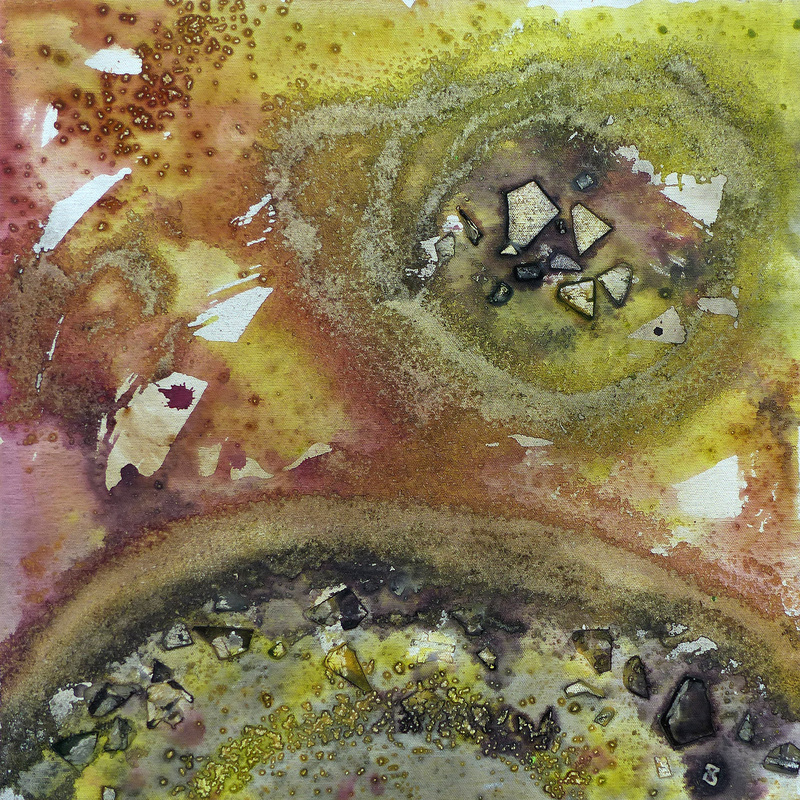
Edward and Heather Cowie's paintings will be exhibited at Gavagan Art, Settle, North Yorkshire between 11 October and 8 November.

Picture
Heather Cowie: Of Stone and Song
0 Comments
<<Previous
Forward>>

    Welcome

    to 
    NATURAL LIGHT
    a site devoted to nature, and artists who are 
    inspired by it

    editor Laurence Rose

    Follow us on 
    Facebook and Twitter
    Email us

    RSS Feed

    Tweets by @Naturemusicpoet

    Archives

    October 2018
    September 2018
    May 2018
    January 2018
    December 2017
    November 2017
    October 2017
    August 2017
    June 2017
    May 2017
    April 2017
    October 2016
    July 2016
    June 2016
    April 2016
    January 2016
    December 2015
    November 2015
    October 2015
    September 2015
    August 2015
    July 2015
    June 2015
    May 2015
    April 2015
    March 2015
    February 2015
    January 2015
    December 2014
    November 2014
    October 2014
    September 2014
    August 2014
    July 2014
    June 2014

    Categories

    All
    Australia
    BBC Proms
    Biodiversity
    Birds
    Campaigns
    Cheltenham Festival
    Conversations
    Endangered Species
    Environment
    Fenland
    Festivals
    Flamenco
    Hear And Now
    Iceland
    Landscape
    Literature
    Moth
    Music
    Norfolk Festival Of Nature
    Olivier Messiaen
    Peter Sculthorpe
    Poetry
    Re:Tweet Of The Day
    RSPB
    Sibelius
    Soundscape
    Spain
    Ted Hughes
    The Long Spring
    Uplands
    Wetlands
    Words
    WW1

Powered by Create your own unique website with customizable templates.